
Traveler Health
Blood Thinners and Anticoagulants While Traveling in Arugam Bay: Bleeding Risk, Reef Cuts, and What to Watch For
Oct 28, 2026 · 8 min read
We see a steady number of older travelers and anyone with a history of clots, stents, or atrial fibrillation coming through Arugam Bay on warfarin, apixaban, rivaroxaban, dabigatran, or an antiplatelet like clopidogrel. Most get through a trip here with zero problems. But blood thinners change the risk calculation for things that are completely routine in a surf town — a reef cut, a fall off a scooter, a bad sunburn headache — and it’s worth knowing exactly what changes before you’re standing in front of us with a cut that won’t stop bleeding.
Why this matters more here than at home
Arugam Bay is a place where people cut their feet on coral, come off scooters on gravel, and get knocked around in the shorebreak. None of that is unusual for a healthy twenty-five-year-old. On a blood thinner, the same bump or scrape bleeds longer, bruises bigger, and carries a real risk of a bleed you can’t see — inside the skull after a head knock, or inside the abdomen after a hard fall — that wouldn’t register at all in someone not on anticoagulation. The medication isn’t the problem. Not adjusting your behavior and your first aid around it is.
The common blood thinners we see travelers carrying
- Warfarin — needs regular INR monitoring, is sensitive to diet and other medications, and has the slowest effect to reverse if something goes wrong.
- DOACs (direct oral anticoagulants) — apixaban (Eliquis), rivaroxaban (Xarelto), dabigatran (Pradaxa). No routine blood monitoring needed, but still a real bleeding risk, and dosing has to stay exact and on schedule.
- Antiplatelets — aspirin (low-dose), clopidogrel (Plavix), often after a stent or stroke. Lower bleeding risk than the above but still significant, especially combined with NSAIDs.
If you’re not sure which category your medication falls into, bring the box or a photo of it in. The generic (chemical) name matters far more to us than the brand, since brand names vary wildly between countries.
Reef cuts, scooter falls, and surf wipeouts
A reef cut that would stop bleeding in ten minutes of pressure on a normal person can keep oozing for thirty or more on a blood thinner. That’s expected and not usually dangerous on its own — but it changes what you should do:
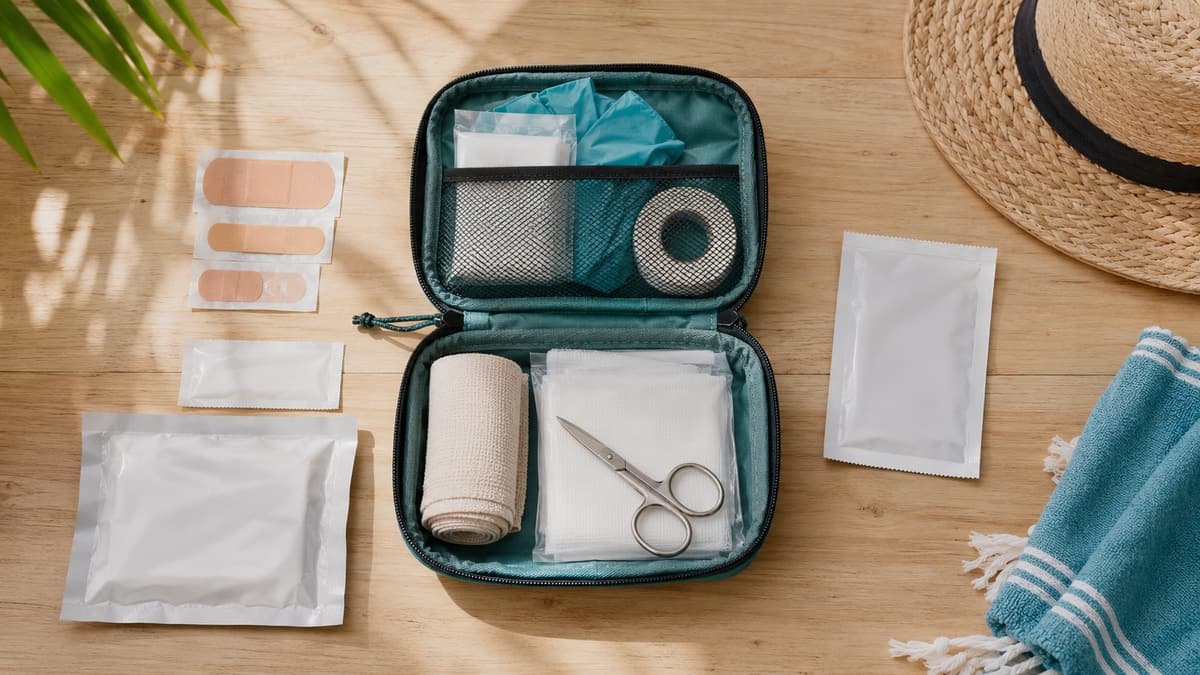
- Apply firm, direct pressure for longer than you think you need to. Ten minutes of actual, uninterrupted pressure, not ten minutes of checking every thirty seconds. Checking early resets the clock.
- Don’t go back in the water until bleeding has fully stopped and the wound is covered. Reef cuts infect fast regardless of medication, and a wound that’s still weeping is an open door for bacteria.
- Any fall with a knock to the head is more serious on a blood thinner, even without losing consciousness. We’d rather check you over for twenty minutes than have you discover a bleed six hours later in a guesthouse.
- Scooter or tuk-tuk accidents with road rash or deeper cuts need to be seen, not just cleaned and bandaged, if you’re anticoagulated. We’ll check whether the wound needs more than a dressing and watch for bruising that keeps spreading.
If you cut yourself and the bleeding won’t stop after fifteen to twenty minutes of proper direct pressure, or the wound is deep, come in rather than waiting it out.
Medication to avoid completely
This is the single most important thing to get right. Do not take ibuprofen, diclofenac, naproxen, or any other NSAID for pain, sunburn, period cramps, or a hangover headache while on a blood thinner — these drugs thin the blood further on top of your existing medication and significantly raise bleeding risk, including in the stomach. Paracetamol is the safe choice for pain and fever at standard doses. Check with us before taking anything new, including some herbal supplements and strong doses of fish oil, which can also affect clotting.
This matters doubly if you come down with dengue, which is common here — dengue itself lowers platelets and causes bleeding risk, and the standard advice to avoid NSAIDs applies to everyone, anticoagulated or not. If you’re on a blood thinner and develop a fever in Arugam Bay, tell us about your medication the moment you walk in.
Keeping your routine steady
- Take your dose at the same time every day, ideally with a phone alarm — jet lag and relaxed holiday schedules are the most common reason people drift off schedule.
- If you’re on warfarin, try to keep your diet roughly consistent, particularly vegetables high in vitamin K (leafy greens), since big swings can shift your INR. You don’t need to avoid them, just don’t suddenly eat far more or far less than usual.
- Carry several days of spare medication separate from your main bag — lost luggage, a soaked backpack, or a long day trip can turn into a missed dose otherwise.
- Don’t skip a dose because you’re worried about an upcoming activity like surfing or diving without asking us first — stopping anticoagulation suddenly carries its own clotting risk and should be a medical decision, not a guess.
Warning signs that need immediate attention
Come in or call 1990 for a free ambulance straight away if you notice:
- Blood in your urine or stool, or stool that’s turned black and tarry
- Vomiting blood or something that looks like coffee grounds
- A headache that’s unusually severe, especially after any knock to the head, with confusion, drowsiness, or vision changes
- Bruising that appears without an obvious cause, or a bruise that keeps expanding over hours
- Bleeding from the gums or nose that won’t stop with pressure
- Sudden swelling, pain, or tightness in the abdomen after a fall
None of these mean panic, but they do mean coming in rather than waiting to see if it settles.
Documentation worth carrying
Bring a printed or photographed list of your medications and the condition they treat — atrial fibrillation, a previous clot, a stent — separate from your phone. If you’re on warfarin and know your target INR range, that number is genuinely useful to us if we ever need to manage a bleed or arrange monitoring locally. We can issue an English-language medical letter, prescription, or itemised receipt for any consultation or medication, usually the same day, which most travel insurers accept directly for reimbursement.
Related reading
- Reef Cuts: How to Treat Them and Why Infection Is the Real Danger
- Painkillers in Sri Lanka: What’s Available and What to Avoid
- High Blood Pressure Medication While Traveling in Arugam Bay
This article is general health information and not a substitute for medical advice. If you’re on a blood thinner and have a cut that won’t stop bleeding, a hard knock, or any warning sign above, walk in any time, day or night, or call 1990 for free emergency transport.
Related articles
Traveler Health
Allergic Reactions & Anaphylaxis in Sri Lanka: What to Do
New foods, new insects, new sun exposure — Sri Lanka has plenty of new allergy triggers. Here's how to spot a reaction early and what to do if it turns serious.
6 min read
Traveler Health
Altitude Sickness in Sri Lanka's Hill Country: Ella, Nuwara Eliya, and Adam's Peak Day Trips
Planning a day trip to Ella, Nuwara Eliya, or an overnight climb of Adam's Peak from Arugam Bay? Here's what altitude actually does at these heights.
7 min read

Traveler Health
Ant Bites in Arugam Bay: Fire Ants, Red Ants, and What Actually Helps
Small red ants and fire ants are everywhere in beach huts and on sandy paths here. Here's why the bites burn so much, how to treat them, and when a reaction needs a doctor.
6 min read