
Traveler Health
Managing Migraines While Traveling in Arugam Bay: Triggers, Medication, and Red Flags
Oct 17, 2026 · 7 min read
If you already get migraines at home, Arugam Bay is not a kind place for you. Bright equatorial sun, long hours outdoors, salty wind, dehydration, broken sleep from early surf checks or late parties, skipped meals, strong incense and street-food smells, and a long-haul flight beforehand — that’s six or seven classic migraine triggers stacked on top of each other in the first week of a trip. We see a lot of travelers who manage their migraines perfectly well at home and then get hit hard here, often within the first two or three days.
The good news is that most of this is manageable with a bit of planning. The more important thing is knowing when a bad headache in the tropics is not your usual migraine, because a few dangerous conditions can mimic one.
Why Arugam Bay triggers migraines so easily
- Dehydration. Even mild fluid loss is one of the most reliable migraine triggers, and the heat here causes it faster than most travelers expect.
- Glare and bright light. Open water, white sand, and midday sun are a lot of photic input if you’re sensitive to light.
- Heat itself. A rise in core body temperature can trigger an attack independent of dehydration.
- Skipped or delayed meals. Easy to do when you’re chasing a tide window or a surf lesson.
- Disrupted sleep. Dawn surf checks, late bonfire nights, and jet lag all fragment sleep, which is a well-documented trigger.
- Alcohol, especially in the heat, dehydrates you on top of whatever else alcohol already does to a migraine-prone brain.
- Strong smells. Diesel from tuk-tuks, incense from temples, citronella coils — if smells are a trigger for you, this town has a lot of them.
None of this means you need to avoid the trip. It means your usual prevention routine matters more here, not less.
Managing your medication while traveling
- Bring more than you think you need, in carry-on luggage. If a triptan, anti-nausea tablet, or preventive medication gets lost with checked baggage, replacing it from a small-town pharmacy is unreliable at best.
- Take your abortive medication (triptan, NSAID, or combination) at the very first twinge, not after it’s established. This matters everywhere, but especially here, where getting back to a cool, dark room quickly isn’t always simple.
- Don’t skip your preventive medication because you’re “on holiday.” Jet lag already disrupts your routine; missing doses on top of that is asking for an attack.
- Watch your NSAID use if you’re also taking anything else regularly. If you’re combining a triptan with frequent paracetamol or ibuprofen for sunburn, joint strain from surfing, or a hangover, come and see us — we can check you’re not stacking medications in a way that causes problems, including medication-overuse headache, which is a real trap on longer trips.
- If you run out or lose medication, we can assess you and, where appropriate, supply or prescribe an equivalent — bring the packaging or a photo of it if you have one, since brand names vary by country.
Building a bit of prevention into your trip
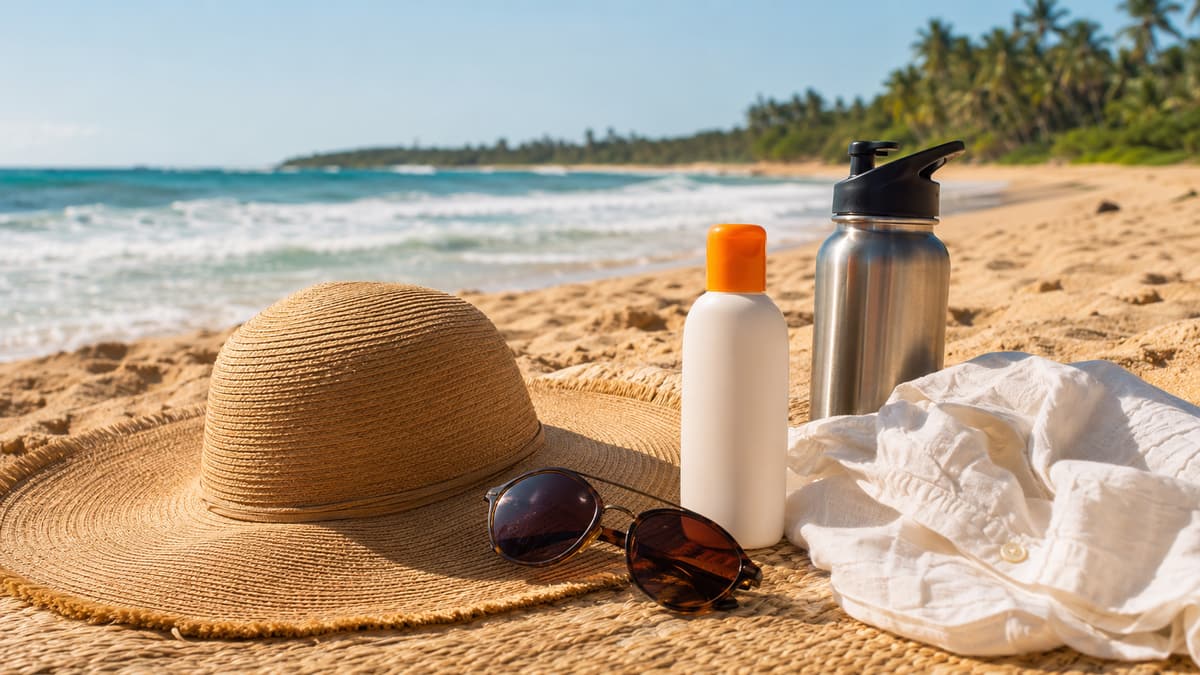
- Carry water constantly, not just at meals. A reusable bottle you top up rather than relying on finding one when you’re already thirsty.
- Wear a hat and sunglasses even on an overcast day — UV and glare come through cloud cover more than people expect.
- Try to protect at least one proper sleep window, even if you’re doing dawn surf sessions. Shift your schedule rather than cutting the hours.
- Eat on a regular rhythm, even a small snack, rather than running on coffee until the big meal of the day.
- Pack an eye mask and earplugs. A dark, quiet guesthouse room is hard to guarantee, so bring your own version of one.
When it isn’t a migraine: red flags to come in for
Most travel headaches, migraine or not, settle with rest, fluids, and your usual medication. Come and see us, or call 1990 for a free ambulance if you can’t get to us, if any of the following apply:
- A sudden, severe headache that peaks within seconds to a few minutes — a “thunderclap” headache — rather than building gradually like your usual migraine
- Headache with fever, neck stiffness, or a rash that doesn’t fade when you press on it
- Headache following a knock to the head, even a minor one from a wipeout or a scooter fall
- New weakness, numbness, slurred speech, confusion, or vision loss accompanying the headache
- A headache that feels different or worse than any migraine you’ve had before
- Headache that doesn’t respond at all to medication that normally works for you, especially with vomiting that won’t stop
- Headache that started or worsened after heavy sun exposure with other signs of heat illness — hot, dry skin, confusion, very high temperature — which points to heatstroke rather than migraine and needs urgent cooling and transport
These situations are the exception, not the rule. Most migraine sufferers who are careful about hydration, sleep, and their medication get through an Arugam Bay trip with nothing worse than a couple of bad afternoons. But because the warning signs above can look superficially similar to a migraine attack, it’s always worth a quick check with us if something feels different from your usual pattern.
Related reading
- Headaches in the Heat: Dehydration Headaches, Migraines, and When to Worry in Arugam Bay
- Painkillers in Sri Lanka: Paracetamol, Ibuprofen, and What’s Safe to Combine
- Jet Lag in Sri Lanka: Resetting Your Body Clock After a Long-Haul Flight
This article is general health information and not a substitute for medical advice. If your headache feels different from your usual migraine, or you’re not sure, walk in any time or call 1990 for emergency transport.
Related articles
Traveler Health
Allergic Reactions & Anaphylaxis in Sri Lanka: What to Do
New foods, new insects, new sun exposure — Sri Lanka has plenty of new allergy triggers. Here's how to spot a reaction early and what to do if it turns serious.
6 min read
Traveler Health
Altitude Sickness in Sri Lanka's Hill Country: Ella, Nuwara Eliya, and Adam's Peak Day Trips
Planning a day trip to Ella, Nuwara Eliya, or an overnight climb of Adam's Peak from Arugam Bay? Here's what altitude actually does at these heights.
7 min read

Traveler Health
Ant Bites in Arugam Bay: Fire Ants, Red Ants, and What Actually Helps
Small red ants and fire ants are everywhere in beach huts and on sandy paths here. Here's why the bites burn so much, how to treat them, and when a reaction needs a doctor.
6 min read