
Traveler Health
What to Pack in Your Travel First-Aid Kit for Arugam Bay
Jul 28, 2026 · 7 min read
Most of what goes wrong on an Arugam Bay trip is small: a reef graze, a headache, a dodgy stomach, a bite that itches. Handled early with a few basics, these stay small. Ignored because you did not have a plaster or a paracetamol at 11pm, they are how people end up feeling miserable for days.
You do not need a medical bag. You need a small kit that fits in a corner of your board bag and covers the common problems. Here is what we would pack, based on what actually walks through our door.
The essentials
For cuts, reef grazes, and wounds:
- Antiseptic — povidone-iodine (Betadine) or chlorhexidine, for cleaning cuts. This matters more than any plaster, because reef cuts get infected fast in warm water.
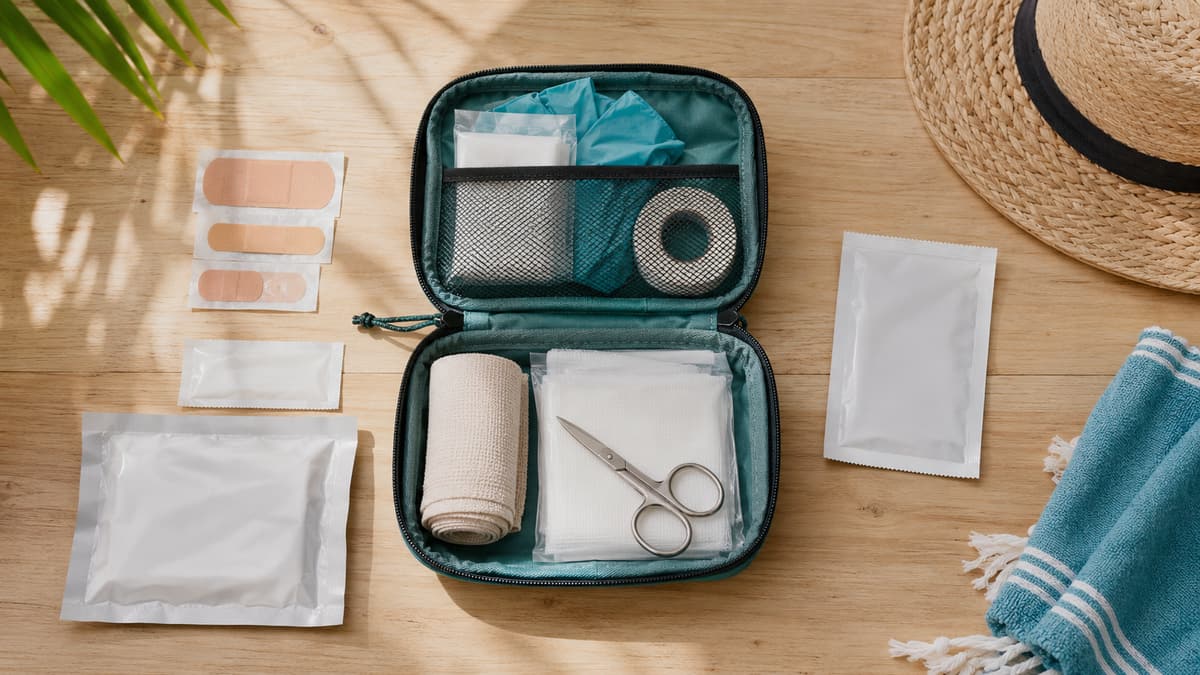
- Non-stick dressings and a roll of tape — better than fabric plasters for surf injuries, which need to breathe and be changed often.
- A few sterile gauze pads for cleaning and covering.
- Small scissors and tweezers — tweezers are genuinely useful for splinters and, if you are unlucky, sea-urchin spines.
For pain, fever, and inflammation:
- Paracetamol — the safe first choice for pain and fever, and the only choice if there is any chance of dengue, since it does not thin the blood.
- Ibuprofen — good for muscle and joint pain and swelling, but avoid it if you might have dengue or a stomach bug.
For your stomach:
- Oral rehydration salts (ORS) — the most useful thing in the whole kit. See our guide to dehydration and rehydration. Pack more than you think you need.
- Loperamide (Imodium) — for when you genuinely cannot be near a bathroom, such as a long bus ride. Not for everyday use; usually it is better to let a bug run its course while you rehydrate.
For skin, sun, and bites:
- High-SPF sunscreen (30+), reef-safe if you can, applied properly. See sun protection and heat stroke.
- DEET insect repellent, 20–30% — your main defence against mosquito-borne illness.
- Antihistamine tablets — for bites, stings, and mild allergic reactions.
- A small tube of hydrocortisone cream for itchy bites and rashes.
Personal and practical:
- Any prescription medication you take, in enough supply for the whole trip, in its original labelled packaging.
- A photo on your phone of your prescriptions and any allergies.
- A copy of your travel insurance details and emergency numbers.
What to leave to us
Some things are not worth carrying, because doing them yourself badly is worse than not doing them at all:
- Antibiotics. Do not bring a random course “just in case.” The wrong antibiotic, or one taken for the wrong reason, does more harm than good and drives resistance. If a wound or infection needs antibiotics, come in and we will prescribe the right one.
- Stitches, sterile suturing, and deep wound cleaning. A wound that needs closing needs proper light, magnification, and sterile equipment. That is a clinic job, and we are open 24 hours for exactly this.
- Anything for a real emergency. No traveler kit handles a serious accident, a bad allergic reaction, or a high fever that will not break. That is what we, and the free 1990 ambulance, are here for.
The simplest advice of all
Keep the kit somewhere you will actually reach for it, and restock it as you use things — our pharmacy carries all of the above if you run low or forgot something at home. A good first-aid kit is not about being ready for a disaster. It is about handling the small stuff at midnight so it never becomes the big stuff.
And when something is beyond the kit — a wound you cannot clean, a fever, a stomach bug that will not settle, a bite that looks angry — do not wait it out. Walk in. Small problems are quick and cheap to treat early.
This article is general health information and not a substitute for medical advice. For anything you are unsure about, come in any time, day or night, or call 1990 for emergency transport.
Related articles
Traveler Health
Anti-Rabies Vaccine in Arugam Bay: Where to Get It, Fast
Bitten or scratched by a dog or monkey in Arugam Bay? We stock human anti-rabies vaccine and can start treatment the same day. Here's what to do right now.
6 min read

Traveler Health
Dengue Fever in Sri Lanka: What Travelers Need to Know
Dengue is the most common mosquito-borne illness in Sri Lanka. Learn how to prevent it, recognise the symptoms, and know when to see a doctor.
7 min read
Traveler Health
Food and Water Safety in Sri Lanka
Sri Lankan food is a highlight of any trip. Here's how to enjoy it without spending two days of your holiday in bed.
5 min read