
Traveler Health
Blisters and Foot Care for Travelers in Arugam Bay
Aug 25, 2026 · 6 min read
Arugam Bay is a barefoot, flip-flop kind of place, and that’s exactly why we see so many blistered feet. New sandals bought for the trip, hours of walking on hot sand, sweaty feet inside water shoes, a long tuk-tuk day in shoes that don’t quite fit — it doesn’t take much. On its own a blister is nothing. In tropical heat and humidity, with sand and salt water working their way into broken skin, a neglected blister can turn into a genuine infection within a couple of days. Here’s how to handle one properly.
Why blisters form so easily here
A blister is your skin’s response to friction and heat — fluid collects under the top layer to cushion the area being rubbed. Three things about Arugam Bay make blisters more common and more troublesome than they’d be at home:
- New footwear. Sandals, reef shoes, and hiking sandals bought just before or during the trip haven’t been broken in, and the straps rub in places your old shoes never did.
- Heat and sweat. Damp, sweaty skin blisters far more easily than dry skin. Walking on hot sand or pavement in closed shoes makes this worse.
- Sand as an abrasive. Fine sand gets inside sandals and socks and acts like sandpaper against already-irritated skin, both causing new blisters and grinding open the ones you already have.
How to treat a blister
If it’s still intact (not yet burst):
- Leave it alone if you can. The skin over an unbroken blister is the best possible dressing — it’s sterile and keeps bacteria out.
- Cover it with a proper blister plaster (hydrocolloid type, sold at any pharmacy here) or a simple padded plaster to reduce further friction. Don’t wrap it too tight.
- Change footwear or add padding so nothing keeps rubbing the same spot.
If it has burst, or if it’s large, tense, and painful enough that you need to drain it:
- Wash your hands and the blister area with soap and clean water first.
- Sterilise a needle (a lighter flame for a few seconds, then let it cool, or use an alcohol wipe). Pierce the blister at its edge, low down, so gravity helps the fluid drain out.
- Gently press out the fluid with a clean cloth or gauze. Leave the overlying skin in place — don’t peel it off. It still protects the raw skin underneath while it heals.
- Clean the area with antiseptic (povidone-iodine or chlorhexidine), then apply a thin layer of antiseptic ointment and a non-stick dressing.
- Change the dressing daily, checking each time for signs of infection.
Signs it’s becoming infected
This is the part that matters in a hot, humid, sandy environment. Come and see us if you notice:
- Redness spreading outward from the blister rather than staying at the edge
- Increasing pain, rather than gradual improvement
- Pus, cloudy fluid, or a foul smell
- Warmth and swelling around the area
- A red line tracking up the foot or leg (a sign of spreading infection that needs urgent treatment)
- Fever
Untreated skin infections in the tropics can progress quickly, sometimes to cellulitis that needs oral or IV antibiotics. We’d much rather see a simple blister on day one than an infected foot on day four. If you’re diabetic or have any circulation problems, come in for any foot wound at all, however minor it looks — foot infections are more serious and progress faster in those conditions.
Prevention
- Break in new sandals before you rely on them for full days out. Wear them around your guesthouse for an hour or two first, and pack a backup pair of shoes you already know are comfortable.
- Keep feet dry when you can. Rinse sand off before it has a chance to grind against damp skin, and let sandals dry out between wears rather than putting sweaty feet straight back into them.
- Tape high-friction spots preventatively. If you know a certain strap rubs, put a plaster or a strip of soft tape over that spot before you start walking, not after it hurts.
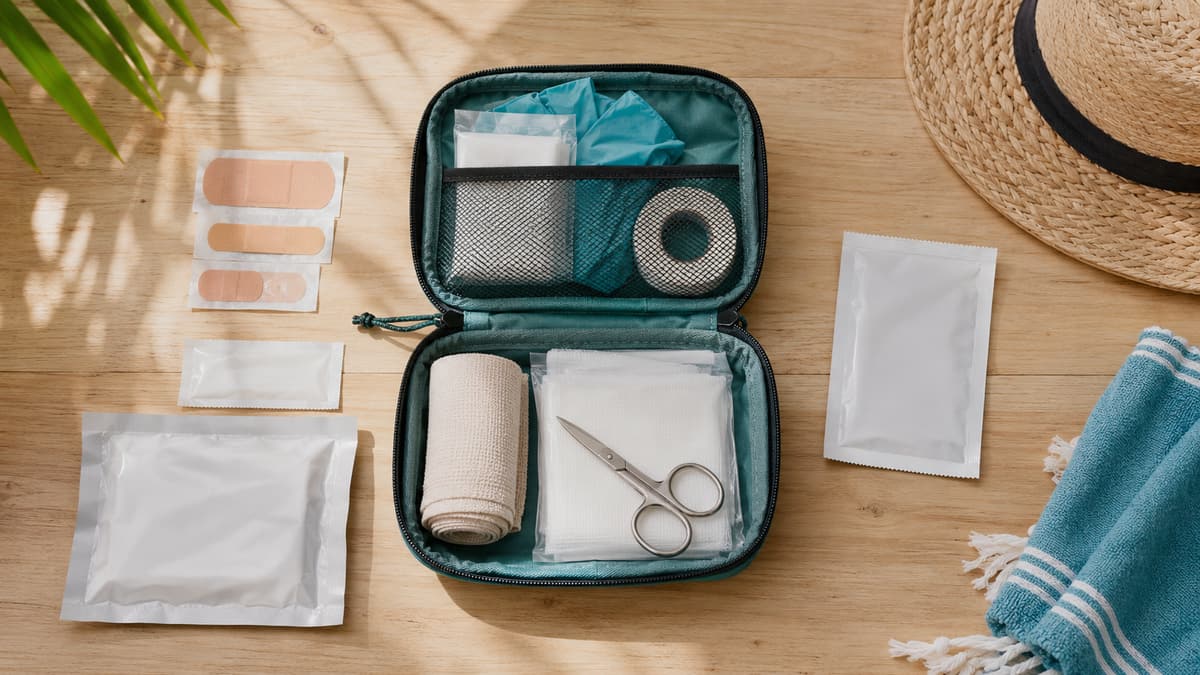
- Carry a small foot-care kit. Blister plasters, antiseptic wipes, and a couple of adhesive dressings take up almost no space in a day bag and save a lot of trouble.
- Wear reef shoes for rocky or coral-strewn walks and rock-hopping to the point breaks, not just for the water. Bare feet and thin flip-flops on hot rock and coral rubble are one of the most common ways we see combined blisters and cuts.
When to come in
Most blisters heal on their own within a few days with basic care. Come and see us if a blister looks infected, if it’s on a spot that keeps reopening because you can’t rest it, if you’re diabetic, or if you’re simply not sure whether a wound on your foot needs more than a plaster. We can clean it properly, dress it, and give you antibiotics if needed — walk-ins are always welcome.
Related reading
- Fungal Skin Infections in Arugam Bay: Prevention and Treatment
- Reef Cuts: How to Treat Them and Why Infection Is the Real Danger
- Building a Travel First Aid Kit for Arugam Bay
This article is general health information and not a substitute for medical advice. If a wound on your foot looks infected or isn’t healing, walk in and see us any time, or call 1990 for emergency transport.
Related articles
Traveler Health
Allergic Reactions & Anaphylaxis in Sri Lanka: What to Do
New foods, new insects, new sun exposure — Sri Lanka has plenty of new allergy triggers. Here's how to spot a reaction early and what to do if it turns serious.
6 min read
Traveler Health
Anti-Rabies Vaccine in Arugam Bay: Where to Get It, Fast
Bitten or scratched by a dog or monkey in Arugam Bay? We stock human anti-rabies vaccine and can start treatment the same day. Here's what to do right now.
6 min read
Traveler Health
Asthma and Breathing Problems in Arugam Bay: Managing Your Inhaler in the Heat and Dust
Heat, dust, incense smoke, and salt air can all trigger asthma in Arugam Bay. Here's how to manage your inhaler, spot a serious flare-up, and what we can do.
8 min read