
Common Illnesses
Cold Sores While Traveling: Why Sun, Stress, and Sri Lanka's Heat Trigger Flare-Ups
Nov 5, 2026 · 6 min read
We see a steady trickle of travelers who arrive in Arugam Bay feeling great and three days later are standing at the counter with a tingling lip, convinced they’ve picked up something exotic. Almost always, it’s a cold sore — and almost always, the trip itself is what set it off.
What a cold sore actually is
Cold sores (also called fever blisters) are caused by herpes simplex virus type 1 (HSV-1), which an estimated two-thirds of adults worldwide carry in a dormant state in nerve tissue near the mouth. Once you’re infected, usually from childhood, the virus never fully leaves. It sits quietly until something disturbs it, then travels back down the nerve to the skin’s surface and causes a blister.
This means a cold sore while traveling isn’t a new infection from Sri Lankan food, water, or a mosquito. It’s almost always a reactivation of a virus you already had.
Why travel is such a common trigger
HSV-1 reactivates when the immune system is under some form of stress, and a beach trip to Arugam Bay stacks up several triggers at once:
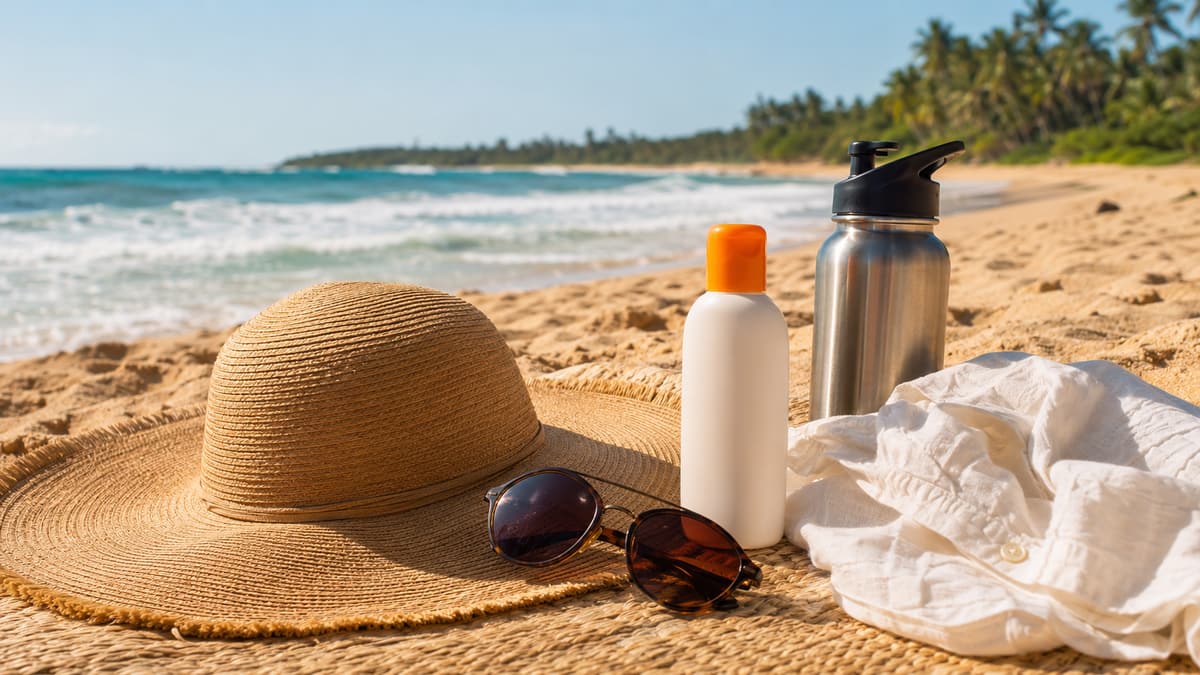
- UV exposure. Strong tropical sun on the lips and face is one of the best-documented cold sore triggers there is. Surfing, snorkelling, and long beach days mean hours of direct sun on exactly the skin where cold sores appear.
- Heat and dehydration. Running a mild fluid deficit, which is easy to do here if you’re not drinking enough, is a classic flare trigger — hence the old name “fever blister.”
- Disrupted sleep and jet lag. New time zones, early surf checks, and noisy guesthouses all cut into sleep quality, which weakens local immune control of the virus.
- Physical stress and illness. Travel fatigue, a cold, mild sunstroke, or even a change in diet can be enough to tip things over.
- Wind and salt. Constant exposure to wind and salt spray dries and irritates the lips, which seems to make reactivation more likely in people who are already prone to it.
None of this means you caught something new here. It means your trip triggered something that was already waiting.
Recognising the stages
- Tingling or itching at the site, usually on or near the lip border, twelve to twenty-four hours before anything is visible. This is the best window to start treatment if you have it with you.
- Small, fluid-filled blisters cluster and appear, often slightly painful or sensitive to touch.
- Blisters burst and weep, which is the most contagious stage.
- A crust forms as it heals, usually within four to six days.
- Full healing typically takes seven to ten days total.
What to do if one starts
- Start antiviral cream at the tingling stage if possible. Topical aciclovir or penciclovir cream, both available over the counter at pharmacies here including ours, work best applied at the very first sign, five times a day.
- For a bigger or more painful outbreak, oral antiviral tablets work better than cream. We can prescribe aciclovir or valaciclovir tablets, which shorten the outbreak and reduce pain more reliably than cream alone, especially if started within the first day.
- Use high-SPF lip balm religiously once you’ve had one. Sun is both a trigger and an irritant to healing skin.
- Keep it dry and leave it alone. Don’t pick at the crust. In this climate, a weeping cold sore that’s constantly damp from sweat or salt water heals slower and is more likely to get a secondary bacterial infection.
- Paracetamol or ibuprofen for discomfort, as needed.
- Wash your hands after touching it, and avoid sharing cups, cutlery, towels, or lip balm while it’s active — this is the most contagious stage.
When to come and see us
Most cold sores are a minor nuisance that clear up on their own within a week to ten days. Walk in if:
- The sore is unusually large, spreading beyond the lip onto the cheek or into the mouth
- You have several separate outbreaks happening at once
- It isn’t improving after ten days, or looks infected — increasing redness, swelling, warmth, or pus
- You have a weakened immune system, are pregnant, or have eczema (cold sores can spread aggressively on eczema-affected skin, a condition called eczema herpeticum, which needs prompt treatment)
- Sores appear near the eye — herpes affecting the eye is a genuine emergency and needs same-day treatment to protect your vision
We stock both topical and oral antivirals, so there’s no need to wait out a painful flare-up for the rest of your trip.
Preventing the next one
If you know you’re prone to cold sores, pack antiviral cream before you travel rather than hunting for it mid-outbreak. Use a high-SPF lip balm every day you’re in the sun here, not just after you feel a tingle. Stay ahead of dehydration, and try to protect at least a few hours of real sleep even on the busiest surf days. None of this guarantees you won’t get one, but it meaningfully lowers the odds on a trip that already asks a lot of your body.
Related reading
- Sunburn Treatment in Arugam Bay
- Tropical Skin Fungal Infections in Arugam Bay
- Black Henna Tattoo Reactions in Arugam Bay
This article is general health information and not a substitute for medical advice. If a cold sore is spreading, near your eye, or not healing, walk in and see us any time, or call 1990 for a free ambulance in a genuine emergency.
Related articles
Common Illnesses
Heartburn and Acid Reflux from Spicy Sri Lankan Food: What Actually Helps
Sri Lankan curry is wonderful and brutal on a sensitive stomach. Here's why spicy food triggers heartburn here specifically, and how to settle it fast.
7 min read

Common Illnesses
Boils and Skin Abscesses in Arugam Bay: When They Need to Be Drained
Heat, sweat, and sand turn a blocked hair follicle into a painful boil fast in Arugam Bay. Here's how to tell a boil from a pimple and when it needs draining.
7 min read
Common Illnesses
Common Cold and Flu in Sri Lanka: Managing Respiratory Illness While Traveling
A blocked nose and sore throat in Arugam Bay usually is just a cold. Here's how to tell it apart from something more serious, and how to treat it fast.
7 min read