
Traveler Health
Prickly Heat in Arugam Bay: Why the Humidity Gives You a Rash
Aug 2, 2026 · 6 min read
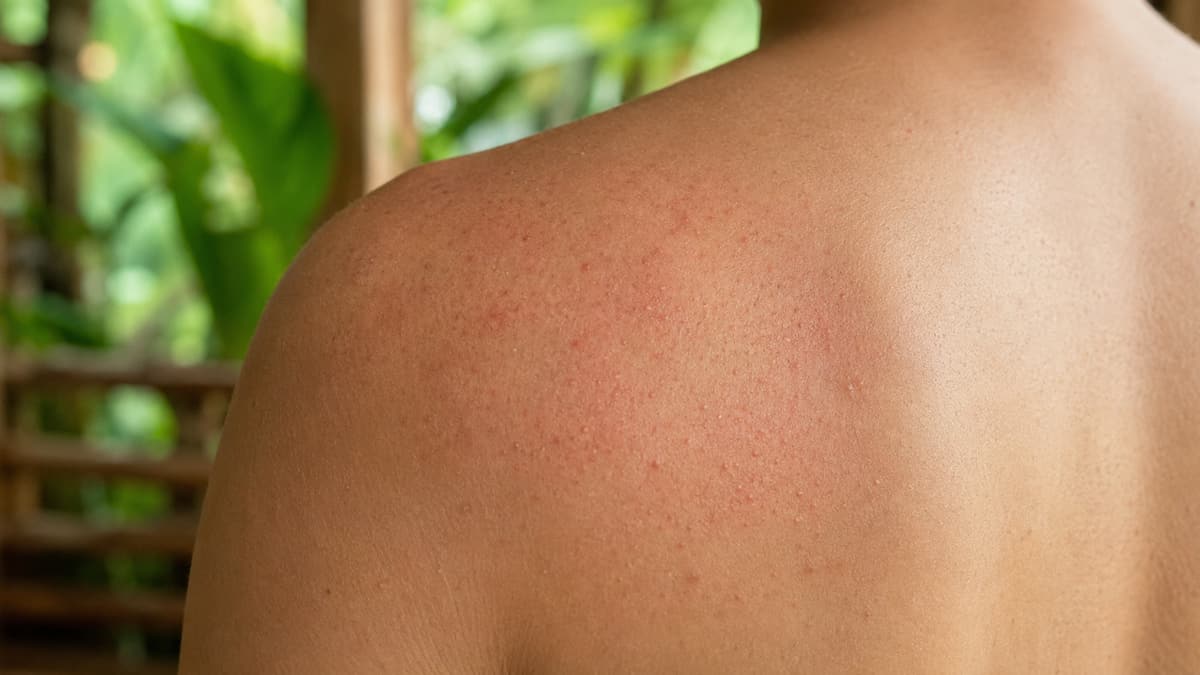
A few days into an Arugam Bay trip, a lot of travelers notice a new rash — tiny, itchy, sometimes stinging bumps across the chest, back, neck, or wherever a rash vest or wetsuit sits against the skin. It isn’t sunburn, and it usually isn’t an allergy. It’s prickly heat, and it’s one of the most common skin complaints we see, especially in people who’ve just arrived from a cooler climate.
What prickly heat actually is
The medical name is miliaria, and the mechanism is simple: sweat gets trapped under the skin instead of evaporating off it. When the ducts that carry sweat to the surface get blocked — by dead skin, sunscreen, tight clothing, or just the sheer volume of sweat your body is producing in the heat — the trapped sweat leaks into the surrounding skin and causes irritation.
Sri Lanka’s east coast is humid nearly all year, and humidity is the real driver here, more than temperature alone. Sweat can’t evaporate efficiently in eighty percent humidity, so it sits on the skin and in the pores far longer than it would in a dry heat. Combine that with a rash vest, wetsuit top, or backpack strap pressing on the skin, and you have the exact conditions prickly heat needs.
What it looks like
There are a few different patterns, from mild to more uncomfortable:
- Tiny clear or white blisters just under the skin surface, with little to no redness or itching — the mildest form, often on the neck and shoulders
- Small red bumps with intense itching or a prickling, stinging sensation — the most common type travelers come in for, usually on the chest, back, and skin folds
- Deeper, firmer, flesh-coloured bumps that can persist for days to weeks — less common, and more likely to need a doctor’s input
It tends to show up first wherever clothing sits tight against sweaty skin: under a rash vest, along a backpack strap, in the waistband, under the arms, in the crease of the elbows and knees, and on the neck.
Treatment
Good news: prickly heat is almost always self-limiting once you stop the skin from staying hot and wet. What actually helps:
- Cool the skin down. A cool (not cold) shower or a fan directed at the affected area brings relief quickly and helps the ducts unblock.
- Dry off completely and let the skin breathe. Pat dry rather than rub, and spend some time with the affected area uncovered before putting clothes back on.
- Switch to loose, breathable cotton instead of synthetic or tight-fitting fabric, at least until it settles.
- Calamine lotion or a mild menthol/talc-based cooling powder calms the itching and stinging well. We stock both.
- A mild topical steroid cream for a few days can help if the itching is significant — ask us, we can advise on strength and how long to use it for.
- Avoid thick, greasy moisturisers and heavy sunscreen over the affected area while it’s active — they block pores further.
Most cases clear within a few days once the skin gets a chance to cool and dry properly. Scratching doesn’t help and raises the risk of a secondary skin infection, so trim your nails and try to leave it alone.
Prevention
Once you know what triggers it, prickly heat is largely avoidable for the rest of your trip:
- Rinse off and change out of wet or sweaty clothing as soon as you reasonably can, rather than sitting in a damp rash vest between surf sessions
- Choose loose, breathable fabrics for the hours you’re not in the water — cotton over synthetics
- Stay in the shade or under a fan during the hottest, most humid parts of the day, particularly your first week before you’ve acclimatised
- Use a lighter, non-greasy sunscreen — thick, oily formulas trap heat and sweat against the skin more than gel or spray formulations do
- Keep sheets and pillowcases breathable and use a fan or air conditioning at night if the rash is bothering your sleep
A note for surfers
Rash vests and wetsuit tops are exactly the setup that causes prickly heat — tight fabric holding sweat against warm skin for hours at a time, session after session. Rinse and remove wet gear between sessions rather than leaving it on between surfs, and give your skin some uncovered time each day, even just for an hour in the shade. If you’re doing multiple sessions daily on a longer surf trip, this alone prevents most of the cases we see.
When to see a doctor
Prickly heat is usually a nuisance rather than a danger, but come in if:
- The bumps become painful, swollen, or start oozing pus — a sign of secondary infection
- A fever develops alongside the rash
- It hasn’t improved after a week of keeping the skin cool and dry
- You’re not sure whether it’s prickly heat, an allergic reaction, or something else — a rash that spreads fast, blisters heavily, or comes with breathing trouble needs an urgent look
We can usually tell prickly heat apart from other rashes on sight, treat it in one visit, and give you an itemised English receipt if you need to claim it on travel insurance.
Related reading
- Sun Protection and Heat Illness on Sri Lanka’s East Coast
- What to Pack in Your Travel First-Aid Kit for Arugam Bay
This article is general health information and not a substitute for medical advice. If a rash is spreading, painful, or you’re simply not sure what it is, walk in any time or call 1990 for emergency transport.
Related articles

Traveler Health
Allergic Reactions & Anaphylaxis in Sri Lanka: What to Do
New foods, new insects, new sun exposure — Sri Lanka has plenty of new allergy triggers. Here's how to spot a reaction early and what to do if it turns serious.
6 min read

Traveler Health
Anti-Rabies Vaccine in Arugam Bay: Where to Get It, Fast
Bitten or scratched by a dog or monkey in Arugam Bay? We stock human anti-rabies vaccine and can start treatment the same day. Here's what to do right now.
6 min read
Traveler Health
Asthma and Breathing Problems in Arugam Bay: Managing Your Inhaler in the Heat and Dust
Heat, dust, incense smoke, and salt air can all trigger asthma in Arugam Bay. Here's how to manage your inhaler, spot a serious flare-up, and what we can do.
8 min read