
Common Illnesses
Typhoid Fever in Sri Lanka: Why It Isn't Just Food Poisoning
Aug 1, 2026 · 7 min read
Most travelers who get sick from food or water in Sri Lanka have a rough few days of diarrhea and then bounce back. Typhoid is a different animal. It’s caused by bacteria rather than the usual mix of viruses and gut bugs, it builds gradually instead of hitting overnight, and it needs antibiotics rather than just rest and rehydration. It’s uncommon in short-stay tourists, but it’s real, it circulates in Sri Lanka, and it’s worth knowing the difference between typhoid and a bad case of traveler’s diarrhea.
What typhoid actually is
Typhoid fever is caused by Salmonella Typhi, a bacterium that spreads through food or water contaminated with the stool of an infected person. Unlike the bacteria behind ordinary traveler’s diarrhea, which mostly stay in the gut and cause a few unpleasant days, S. Typhi gets into the bloodstream and spreads through the body. That’s why it behaves like a slow-building systemic illness rather than a stomach bug.
The route in is the same as most food and water illness here: contaminated water, ice made from it, raw produce washed in it, or food handled by someone carrying the bacteria without necessarily being sick themselves. Longer stays, backpacker-style travel that involves eating widely outside tourist restaurants, and visiting friends or relatives in more rural settings all raise the risk somewhat. A two-week beach holiday eating at busy, established places in Arugam Bay carries a low risk, but it isn’t zero.
Symptoms — and why it’s easy to mistake for something else
This is the part that catches people out. Typhoid doesn’t announce itself the way dengue does.
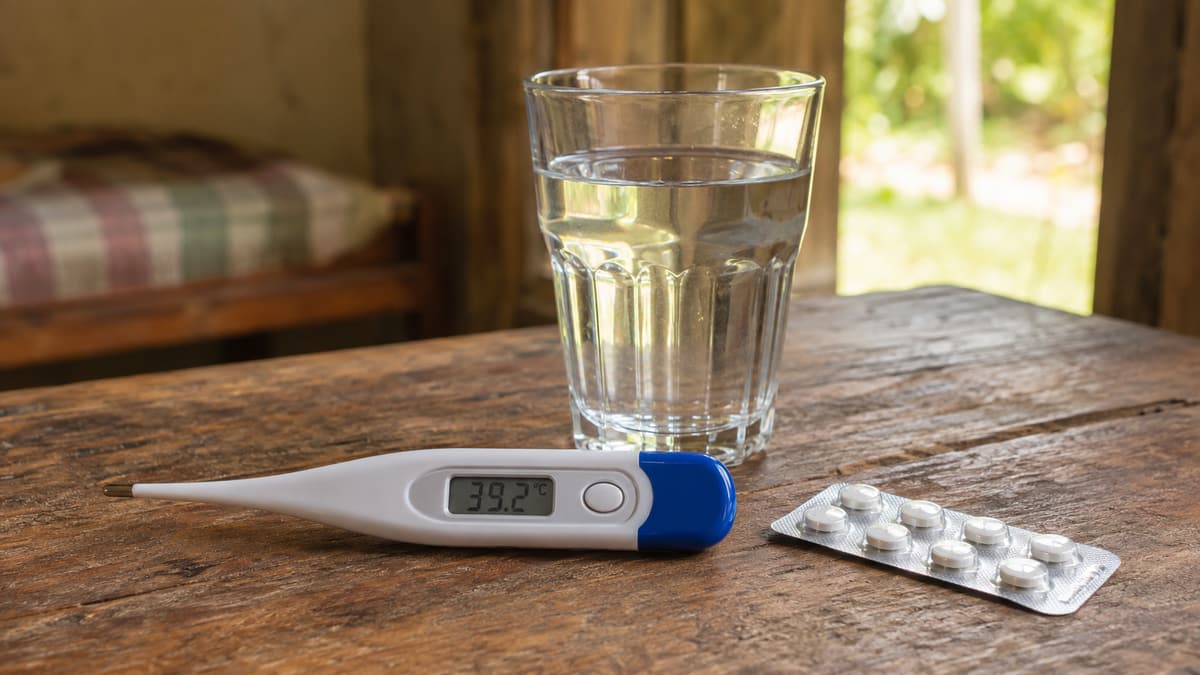
- A fever that climbs gradually over several days, often reaching 39–40°C by the end of the first week, rather than the sudden spike travelers associate with dengue.
- Headache and general malaise that can feel like a bad flu.
- Abdominal discomfort, which may come with constipation as often as diarrhea — a detail that surprises a lot of people, who expect a “food poisoning” illness to mean loose stools from the start.
- Loss of appetite and fatigue that’s out of proportion to how mild the fever feels on any given day.
- A slow pulse relative to the fever — doctors call this “relative bradycardia,” and it’s one of the clues that points us toward typhoid over other tropical fevers.
- Occasionally, a faint pink rash on the trunk in the second week.
The pattern that should make you suspicious is a fever that keeps climbing day after day rather than settling, especially past day four or five, particularly if it isn’t fitting the usual dengue picture of severe body aches and a rash appearing early. Traveler’s diarrhea, by contrast, usually peaks within a day or two and starts improving inside a week.
Why testing takes a bit more patience
Dengue has a fast blood test that gives an answer within hours. Typhoid is diagnosed with a blood culture, which needs the bacteria to grow in a lab — that typically takes one to three days, sometimes longer. This isn’t a reason to delay coming in. If your history and exam point toward typhoid — a build-up over several days, relevant food or water exposure, a fever that doesn’t fit dengue or a simple viral illness — we’ll often start treatment on clinical suspicion while the culture is still pending, rather than making you wait it out untreated.
Treatment
Typhoid responds well to antibiotics when caught reasonably early. We typically use azithromycin or a fluoroquinolone, depending on your history and any known resistance patterns, usually as an outpatient course of five to seven days. Most people start feeling meaningfully better within two to three days of starting the right antibiotic, even though full recovery of energy can take a couple of weeks.
Paracetamol helps with the fever in the meantime. As with any prolonged tropical fever, avoid ibuprofen and other NSAIDs until dengue has been ruled out, since the early pictures can overlap and NSAIDs are riskier if dengue turns out to be the cause.
Left untreated, typhoid can progress to serious complications in the second or third week — intestinal bleeding or perforation being the ones we take most seriously. This is rare in travelers who seek care within the first week of a persistent fever, which is exactly why we’d rather see you early on a fever that’s building rather than settling.
Prevention
- Get vaccinated before you travel, if you haven’t already. It’s one of the standard travel vaccines for Sri Lanka — see our article on vaccines to consider before your trip. It isn’t perfect protection, but it meaningfully lowers your risk and the severity if you do catch it.
- Stick to bottled or properly filtered water, and skip ice unless you trust the source.
- Favour hot, freshly cooked food over anything that’s been sitting at room temperature, and be more cautious with raw salads and pre-cut fruit from places you don’t know. Our food and water safety article covers this in more detail — the same habits that reduce ordinary traveler’s diarrhea reduce typhoid risk too.
- Wash your hands before eating, especially after using a bathroom that may not have reliable handwashing facilities.
When to come in
See us if you have a fever that’s lasted more than two or three days, especially if it’s climbing rather than settling, or if you’ve had a fever together with a headache, general exhaustion, and abdominal discomfort that doesn’t clearly look like ordinary traveler’s diarrhea. We’ll examine you, take a proper exposure history, run the tests that make sense for your picture — often dengue and typhoid together, since they can look similar early on — and start treatment promptly if the clinical picture fits. If you need it for a travel insurance claim afterwards, we can give you an itemised English-language receipt and a same-day medical report.
Related reading
- Fever in the Tropics: When It’s Serious and When It Isn’t
- Food Poisoning and Traveler’s Diarrhea in Sri Lanka
This article is general health information and not a substitute for medical advice. A fever that lasts more than two or three days, or keeps climbing, needs medical assessment — walk in and see us, or call 1990 for emergency transport.
Related articles

Common Illnesses
Common Cold and Flu in Sri Lanka: Managing Respiratory Illness While Traveling
A blocked nose and sore throat in Arugam Bay usually is just a cold. Here's how to tell it apart from something more serious, and how to treat it fast.
7 min read
Common Illnesses
Dehydration in the Tropics: Oral Rehydration Salts and When You Need an IV Drip
Heat, surfing, and stomach bugs dehydrate travelers fast in Sri Lanka. Learn how to rehydrate properly, and when oral salts are not enough and you need a drip.
7 min read
Common Illnesses
Ear Wax Removal in Arugam Bay: Blocked Ears After Surfing
Blocked, muffled ear after surfing or swimming in Arugam Bay? We safely remove ear wax and check for infection the same day. Here's what's going on and what not to do.
5 min read