
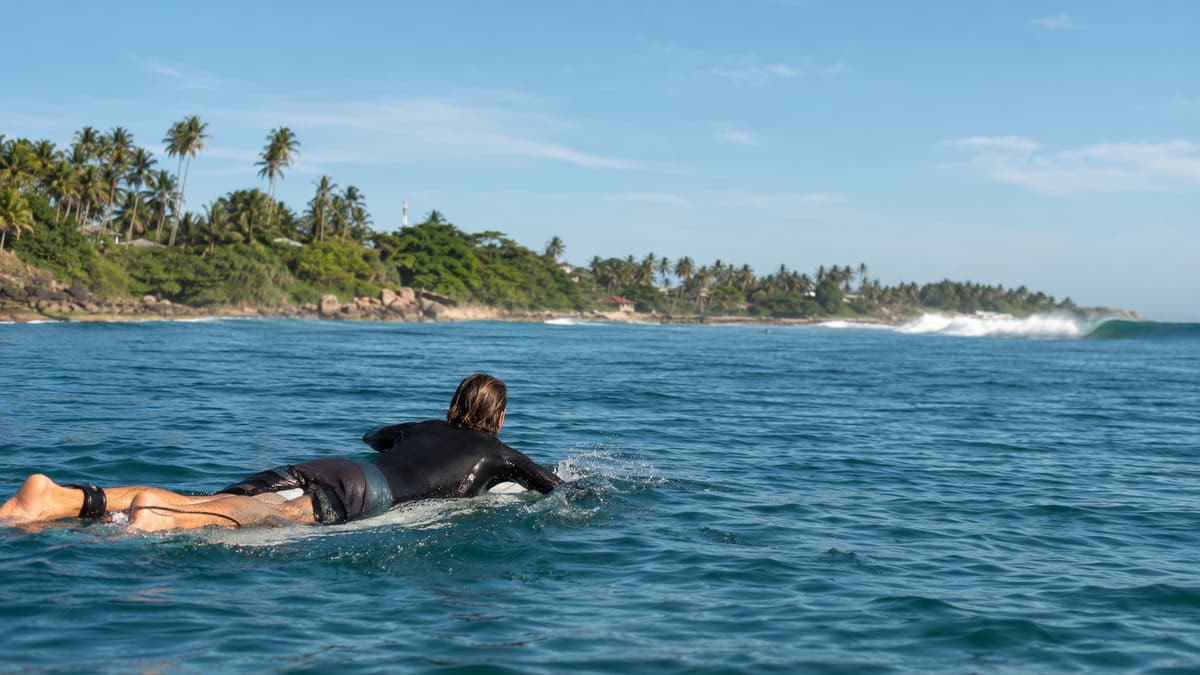
Surfing Injuries
Bruised or Fractured Ribs After a Wipeout: What Surfers Need to Know in Arugam Bay
Sep 24, 2026 · 7 min read
The rail of your own board catching you in the side on the way up. A hard landing on a closeout at Main Point where your chest takes the impact instead of your legs. A wipeout that drives you down onto the reef or a sandbar rib-first. We see this a handful of times most months, especially on bigger swells, and the question everyone asks in the first minutes is the same one: is this just bruised, or is something actually broken? With ribs, that question matters less than it does with other bones — and the answer to “what do I do now” is often the same either way.
Why ribs are treated differently to other bones
A broken arm or ankle gets splinted, kept still, and left to heal. You can’t do that with ribs. Every breath moves them, whether you like it or not, so immobilising a rib cage isn’t an option — and strapping the chest tightly, which people sometimes try, actually does more harm than good by restricting how deeply you can breathe. That’s really the whole story with rib injuries: the treatment is about managing pain well enough that you keep breathing normally, not about fixing the bone directly.
The real risk with a rib fracture isn’t the crack itself. It’s what a fractured rib can do to the structures around it — puncture a lung, causing it to partially collapse, or simply hurt enough that you start taking shallow breaths and coughing less, which lets fluid or mucus build up in the lung and turn into pneumonia days later. That second scenario is the one we watch for most closely, because it’s easy to miss and it’s the thing that actually lands people in hospital.
Bruised rib or fractured rib — the signs
You often can’t tell the difference by feel alone, and honestly, for how we manage the first few days, it doesn’t change much. Both a bad bruise and a genuine fracture typically cause:
- Sharp, localised pain over one spot on the rib cage, worse when you breathe in deeply, cough, laugh, or twist
- Pain that’s reproduced when you press directly on the injured area
- Bruising or swelling over the ribs, though this can take a day or two to appear
- A dull ache that’s there constantly, with sharp spikes on movement or breathing
Things that suggest a genuine fracture rather than just bruising: a distinct crack or pop felt at the moment of impact, pain severe enough that you’re instinctively taking small, shallow breaths, or pain that hasn’t eased at all after several days. None of these confirm a break on their own — the only way to know for certain is imaging, and even then, hairline rib fractures are notoriously easy to miss on a standard X-ray.
Warning signs that mean come in now, not tomorrow
Most bruised and simply-fractured ribs can be managed with rest and pain control. Come in straight away, or call 1990 for the free national ambulance, if you notice:
- Shortness of breath, or breathing that feels genuinely difficult rather than just painful
- Sharp, worsening chest pain, especially if it’s spreading or getting harder to breathe through
- Coughing up blood
- A section of the chest wall that appears to move in when you breathe in, rather than out
- Dizziness, a racing heart, or feeling like you’re going to faint
- The injury followed a serious impact — a heavy fall, a scooter accident, or anything alongside a head knock
These can point to a collapsed lung or internal bleeding, which need a hospital with imaging and, sometimes, a chest drain — care we can’t provide at the clinic but can get you to quickly.
What happens when you come in
We’ll examine the chest, listen to your breathing on both sides, and check your oxygen levels. If your breathing sounds normal and your oxygen is good, an X-ray often isn’t urgent, but if there’s any doubt about the severity, or you’re planning to fly soon, we’ll arrange one at the nearest facility with imaging and talk you through what it shows. Either way, the plan afterward looks similar: solid pain control, and a clear routine for keeping your lungs working properly while the rib heals.
Managing the first two weeks
- Take pain relief on a schedule, not just when it’s bad. Paracetamol regularly, with something stronger if we’ve prescribed it for the first few days. Under-treated pain is what causes the shallow breathing that leads to complications.
- Breathe deeply on purpose, several times an hour, even though it hurts. Taking ten slow, full breaths every hour or two, and coughing properly when you need to clear your chest, keeps your lungs clear. It’s uncomfortable, but it’s genuinely the most important thing you can do.
- Don’t strap or tightly bandage your ribs. It feels like it should help; it actually restricts your breathing and raises your risk of a chest infection.
- Sleep semi-upright for the first few nights if lying flat is painful — propped up on pillows is enough for most people.
- Avoid ibuprofen only if we’ve told you to — for most simple rib bruises and fractures it’s fine and helps, but we’ll flag it if your case is different.
Getting back to the water
This is the part surfers don’t want to hear: a fractured rib takes four to six weeks to heal well enough for paddling and duck-diving, and a bad bruise can still hurt for two or three. Going back too soon on a rib that hasn’t set properly, or on lungs that never fully cleared, is how a manageable injury turns into a hospital admission days into your trip. We’ll give you an honest sense of timeline once we’ve seen you, and check in if you want a second opinion before paddling out again.
If you have travel insurance, keep every receipt — we provide itemised bills in English for consultations, any imaging referral, and medication, which most insurers ask for when you file a claim.
Prevention
Covering your head and turning side-on rather than square-on when you know a wipeout is coming reduces how much force lands directly on the chest. On heavier days at reef breaks like Main Point, a bit more caution about how you fall — trying to control the landing rather than going in stiff and straight — goes a long way toward keeping this a bruise instead of a break.
Related reading
- Suspected Fractures in Arugam Bay: X-Rays, Splinting, and What Happens Next
- Surfer’s Shoulder and Back Pain: Overuse Injuries From Weeks in the Water
- Head Injuries and Concussion After a Surfing Wipeout in Arugam Bay
This article is general health information and not a substitute for medical advice. If you’ve taken a hard hit to the ribs and you’re at all worried, walk in any time, day or night, or call 1990 for a free ambulance if breathing feels difficult.
Related articles
Surfing Injuries
Ankle and Knee Sprains: Surf and Reef-Walk Injuries in Arugam Bay
A rolled ankle on the reef walk or a twisted knee popping up too fast are two of the most common surf injuries we see. Here's how to tell a sprain from a break.
8 min read
Surfing Injuries
Broken Nose and Facial Injuries After a Wipeout in Arugam Bay
A board, fin, or reef to the face is one of the most common surfing injuries we see. Here's how to tell a broken nose from bruising, and when facial swelling means come in now.
7 min read

Surfing Injuries
Contact Lenses in Arugam Bay: Surfing, Salt Water, and Infection Risk
Wearing contacts while you surf in Arugam Bay? Here's the real risk — corneal infection from lagoon and salt water — and how to wear lenses safely on a surf trip.
7 min read