
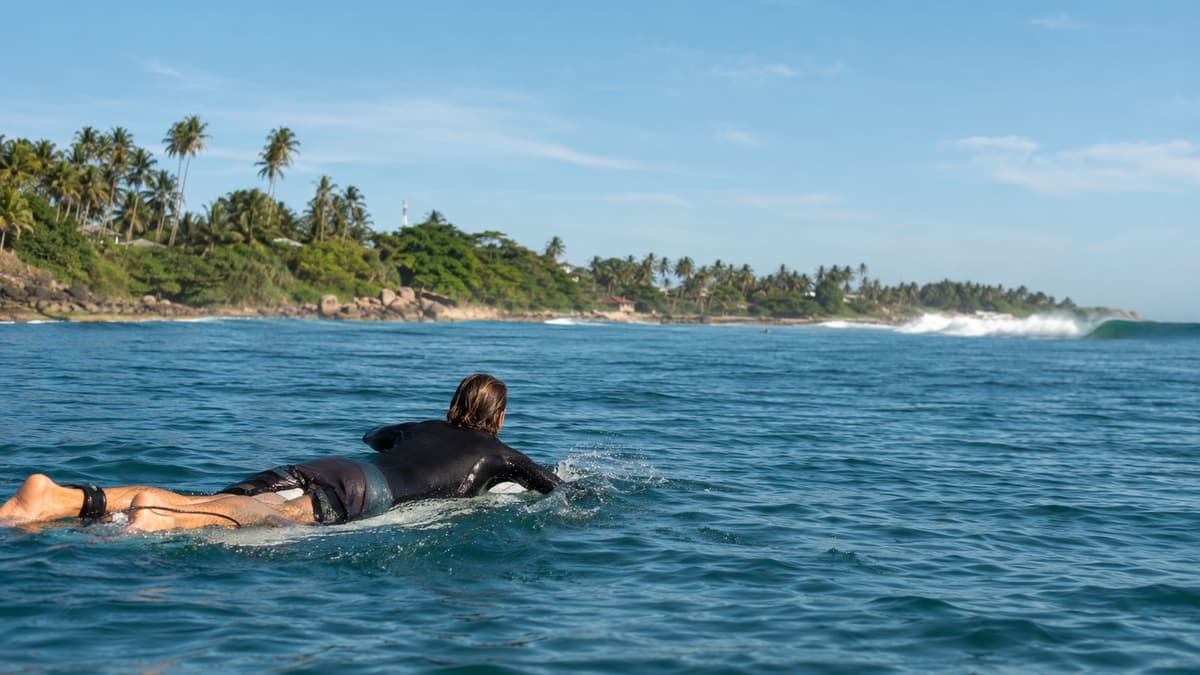
Surfing Injuries
Broken Nose and Facial Injuries After a Wipeout in Arugam Bay
Sep 25, 2026 · 7 min read
Your own board on the leash whipping back after a wipeout. Someone else’s nose or tail catching you in a crowded lineup at Main Point. A hold-down that drives you face-first into the reef or a sandbar. Facial injuries are one of the most common things surfers walk in with after a hard session, and the face bleeds dramatically even from injuries that turn out to be minor — which makes it hard to judge in the moment whether you’ve bruised something or actually broken it.
Why the face takes so many hits
Surfing puts your face closer to hard, fast-moving objects than almost any other sport. Your own board can flip back at you on the leash after a wipeout with real force. In a busy lineup, someone else’s board, fin, or even an elbow during a duck-dive can connect before either of you sees it coming. And a wipeout that drives you down onto a shallow reef or sandbar face-first turns an already hard landing into an abrasion or laceration as well as a blunt impact.
The nose usually takes the brunt of it because it’s the highest point on the face and made of thin, exposed bone and cartilage. Cheekbones, the bones around the eye socket, and the jaw and teeth are the next most common sites — see our dental emergencies guide if a knock has also chipped or loosened a tooth.
Signs of a broken nose versus bruising
Noses swell and bleed heavily even from a moderate knock, so bruising alone doesn’t tell you much in the first hour. Things that point toward an actual fracture rather than just bruising:
- A visible change in shape — flattened, bent to one side, or a new bump on the bridge, best judged once initial swelling has gone down a little
- A distinct crack or crunch felt or heard at the moment of impact
- Pain and tenderness concentrated right over the bony bridge rather than the soft tip
- Difficulty breathing through one or both nostrils that doesn’t improve once the bleeding has stopped
- Bruising that spreads under both eyes (“raccoon eyes”), which can appear a day or two later
A nosebleed on its own, even a heavy one, doesn’t mean the nose is broken — see our nosebleed guide for first aid on the bleeding itself. The two often happen together, and the bleeding is usually the easier part to deal with.
Other facial injuries to watch for
Not every hard knock to the face is a nose injury. Watch for:
- Cheekbone or eye-socket fractures: numbness in the cheek or upper lip, double vision, or a visible asymmetry between the two sides of the face
- Cuts near the eye or eyebrow: these bleed heavily because the skin is thin and well supplied with blood vessels, and often need stitches or adhesive strips to heal without a wide scar
- Jaw injuries: pain opening or closing the mouth fully, teeth that no longer line up the way they used to, or a jaw that feels like it’s catching
- Reef or sand abrasions: these need the same thorough cleaning as any reef cut, and facial wounds in particular are worth having checked because of infection risk so close to the eyes, nose, and mouth
Warning signs that mean come in now, not tomorrow
Most facial knocks from surfing are painful but manageable with rest, ice, and time. Come in straight away, or call 1990 for the free national ambulance, if you notice:
- Clear, watery fluid dripping from the nose after a hard hit, separate from ordinary blood — this can signal a more serious injury near the base of the skull and needs urgent assessment
- Vision changes, double vision, or trouble moving one eye fully in any direction
- Numbness across part of the face that doesn’t settle within a few minutes
- A nose so swollen and painful inside that you can’t breathe through it at all, which can mean a septal hematoma — a blood clot inside the nose that needs to be drained promptly to avoid permanent damage to the cartilage
- The injury came with a knock to the head hard enough to cause confusion, memory gaps, repeated vomiting, or drowsiness — treat that as a possible concussion and get it checked regardless of how the face looks
- Bleeding that won’t stop after the usual pressure and time described in our nosebleed guide
What happens when you come in
We’ll examine the nose and surrounding structures, check inside the nostrils for a septal hematoma (which needs draining the same day if present), and assess whether your bite, jaw movement, and eye movements are normal. If we’re worried about a fracture of the nose, cheekbone, or eye socket, we’ll refer you for imaging at the nearest facility with a CT scanner.
One detail that surprises a lot of travelers: a straightforward nasal fracture usually isn’t set immediately. Facial swelling in the first three to five days makes it hard to judge the true shape of the nose, so the usual approach is ice, pain relief, and review once the swelling has settled — then a referral to an ENT or plastic surgeon for manual realignment if it’s needed, typically within one to two weeks of the injury. We’ll give you a clear plan and timeline before you leave.
First aid in the meantime
- Apply ice wrapped in a cloth for fifteen to twenty minutes at a time over the first two days to limit swelling
- Keep your head elevated, including while sleeping, to reduce fluid build-up in the face
- Use paracetamol for pain and avoid ibuprofen or aspirin for the first day or two, since these can increase bruising and bleeding
- Don’t try to straighten a bent nose yourself — pushing on fresh cartilage and bone can make the injury worse
- Avoid blowing your nose until any bleeding has fully settled
Getting back to the water
Swelling and tenderness usually improve within a week or two, but a fractured nose needs four to six weeks of real healing before it can safely take another hit, and diving under waves or wiping out again too soon risks re-breaking a nose that hasn’t set. If we’ve referred you for a fracture, wait for that follow-up appointment before paddling back out, even if the pain has mostly gone.
If you have travel insurance, keep every receipt — we provide itemised bills in English for consultations, imaging referrals, and any medication, which is exactly what most insurers ask for when you file a claim.
Prevention
Keep your eyes on your board as you fall rather than turning away, and cover your head and face with your arms during a hold-down near the reef. In crowded lineups, a little extra spacing during take-off and a moment’s awareness of who’s paddling near you cuts down on the accidental board-to-face collisions that make up a good share of what we see.
Related reading
- Nosebleeds in Arugam Bay: Surfboard Knocks, Dry Heat, and When It’s More Than a Nuisance
- Head Injuries and Concussion After a Surfing Wipeout in Arugam Bay
- Dental Emergencies in Arugam Bay: What to Do About a Toothache or Broken Tooth Far From a Dentist
This article is general health information and not a substitute for medical advice. If you’ve taken a hard hit to the face and you’re at all worried, walk in any time, day or night, or call 1990 for a free ambulance if breathing or vision is affected.
Related articles
Surfing Injuries
Ankle and Knee Sprains: Surf and Reef-Walk Injuries in Arugam Bay
A rolled ankle on the reef walk or a twisted knee popping up too fast are two of the most common surf injuries we see. Here's how to tell a sprain from a break.
8 min read
Surfing Injuries
Bruised or Fractured Ribs After a Wipeout: What Surfers Need to Know in Arugam Bay
A heavy wipeout onto your board or the reef can bruise or crack a rib. Here's how to tell the difference, why breathing matters more than X-rays, and when to come in.
7 min read
Surfing Injuries
Contact Lenses in Arugam Bay: Surfing, Salt Water, and Infection Risk
Wearing contacts while you surf in Arugam Bay? Here's the real risk — corneal infection from lagoon and salt water — and how to wear lenses safely on a surf trip.
7 min read