
Surfing Injuries
Wrist Sprains and Fractures From Surfing Wipeouts in Arugam Bay
Sep 26, 2026 · 8 min read
The instinct to catch yourself is automatic. You’re thrown off the board, you’re tumbling, and your hand shoots out to brace against the sand, the reef, or the wash underneath you. It’s the reason surfers hurt their wrists so often — the wipeout itself is rarely violent enough to cause damage on its own, but a stiff arm meeting solid ground at the wrong angle is. We see this injury constantly in Arugam Bay, especially among newer surfers still learning to fall properly, and among more experienced ones pushing into bigger swell than usual.
Why the wrist takes the hit
A falling body generates a surprising amount of force, and an outstretched hand concentrates all of it into a small joint made of eight small bones, a mesh of ligaments, and two long forearm bones meeting at odd angles. Land on sand and the wrist usually just bends back hard and sprains. Land on the reef, a rock, or shallow water over a hard bottom, and the same motion can fracture one of those small bones instead. Either way, the pattern is the same: hand down, wrist bent backward, sudden sharp pain.
Sprain or fracture — the tricky part
Most wrist sprains and fractures look identical in the first hour: pain, swelling, and reluctance to put weight through the hand. A few signs point more toward a break and mean you should come in rather than wrap it and wait:
- Pain concentrated sharply over one point of bone, rather than spread across the joint
- Visible deformity — the wrist looks bent or lumpy in a way it shouldn’t
- Swelling and bruising that come on fast and hard within the first half hour
- You heard or felt a distinct crack or snap at the moment of the fall
- You cannot grip anything or rotate your palm up and down without sharp pain
- Numbness or tingling in the fingers
There’s one fracture in particular worth knowing about: a break in the scaphoid, one of the small bones at the base of the thumb side of the wrist. Scaphoid fractures are notorious for feeling like “just a sprain” — mild swelling, pain that’s tolerable enough to keep surfing on, and a normal-looking wrist. The giveaway is tenderness in the small hollow at the base of the thumb (the “anatomical snuffbox”) when you bend your thumb back. Because the scaphoid has a limited blood supply, a missed fracture can fail to heal properly and cause long-term problems, which is exactly why we take any wrist pain that lingers past a few days seriously rather than assuming it’s a sprain that will settle on its own.
First aid on the beach
- Stop surfing. Continuing to paddle or pop up on an injured wrist, even if the pain feels manageable, is how a mild sprain becomes a much longer problem.
- Ice it, wrapped in a cloth rather than directly on skin, for fifteen to twenty minutes at a time.
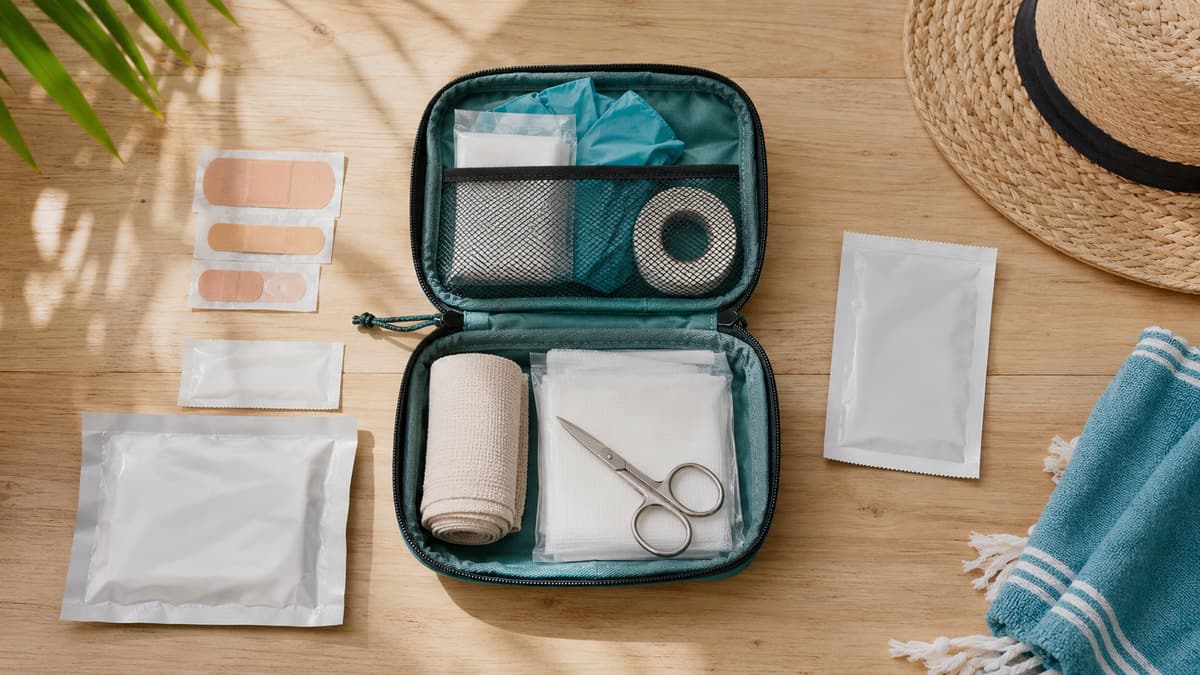
- Support it. A rolled towel, a bandage, or even a rigid flip-flop taped along the underside of the forearm and hand keeps it from moving on the walk back.
- Keep it elevated above heart level where you can, which helps limit swelling.
- Don’t try to test how bad it is by gripping your board rail or pushing through pain — that’s how a hairline crack becomes a displaced one.
When to come in
Walk in rather than waiting it out if:
- You can’t grip, rotate the palm, or bend the wrist without sharp pain
- There’s visible deformity or the swelling is significant
- The pain is focused over the thumb-side of the wrist rather than spread generally
- Pain and swelling haven’t clearly improved after two to three days of rest, ice, and support
- Anything in the fracture-warning list above applies
What we do at the clinic
We examine the joint, check circulation and sensation in the fingers, and if there’s a real possibility of a fracture — including a suspected scaphoid injury, even with a normal-looking wrist — we arrange an X-ray at the nearest facility with imaging, since Arugam Bay itself doesn’t have it on site. A confirmed sprain gets a supportive splint or brace and a realistic timeline. A non-displaced fracture is usually treated with a cast and rest without needing to leave Sri Lanka; a displaced one, or a suspected scaphoid fracture that doesn’t show clearly on the first X-ray, may need a repeat scan or referral to a specialist, and we’ll be upfront with you about which category you’re in. We also provide itemised English receipts for every consultation, X-ray referral, and splint, which most travel insurers accept without back-and-forth.
Recovery
A mild wrist sprain is usually comfortable within a week or two with rest and support. A confirmed fracture, scaphoid injuries especially, can mean six weeks or more in a cast, and going back to paddling before the bone or ligament has properly healed is the most common reason we see the same wrist re-injured, often worse, later in the same trip. If your trip is time-limited, ask us directly whether a brace and modified surfing (bodyboarding, or catching a few gentle waves without heavy paddling) is realistic in your case rather than guessing.
Prevention
Wrist guards, the kind used in skateboarding and snowboarding, do genuinely reduce this injury and are worth packing if you know you fall hard or you’re surfing a shallow, hard-bottomed break. Beyond that, the biggest protective habit is simply how you fall: tucking into a ball or falling flat rather than throwing a stiff arm out to brace yourself takes the load off the wrist and spreads it across the body instead. It feels unnatural at first, but it’s a habit worth building, particularly at reef breaks like Main Point where the bottom underneath you is a lot less forgiving than sand.
Related reading
- Ankle and Knee Sprains: Surf and Reef-Walk Injuries in Arugam Bay
- Suspected Fractures in Arugam Bay: X-Rays, Splinting, and What Happens Next
- Surfer’s Shoulder and Back Pain: Overuse Injuries From Weeks in the Water
This article is general health information and not a substitute for medical advice. If you’ve hurt your wrist surfing and aren’t sure how bad it is, walk in any time, day or night, or call 1990 for a free ambulance if the injury is severe.
Related articles
Surfing Injuries
Ankle and Knee Sprains: Surf and Reef-Walk Injuries in Arugam Bay
A rolled ankle on the reef walk or a twisted knee popping up too fast are two of the most common surf injuries we see. Here's how to tell a sprain from a break.
8 min read
Surfing Injuries
Broken Nose and Facial Injuries After a Wipeout in Arugam Bay
A board, fin, or reef to the face is one of the most common surfing injuries we see. Here's how to tell a broken nose from bruising, and when facial swelling means come in now.
7 min read
Surfing Injuries
Bruised or Fractured Ribs After a Wipeout: What Surfers Need to Know in Arugam Bay
A heavy wipeout onto your board or the reef can bruise or crack a rib. Here's how to tell the difference, why breathing matters more than X-rays, and when to come in.
7 min read