
Surfing Injuries
Surfboard Fin Cuts: When You Need Stitches in Arugam Bay
Oct 1, 2026 · 7 min read
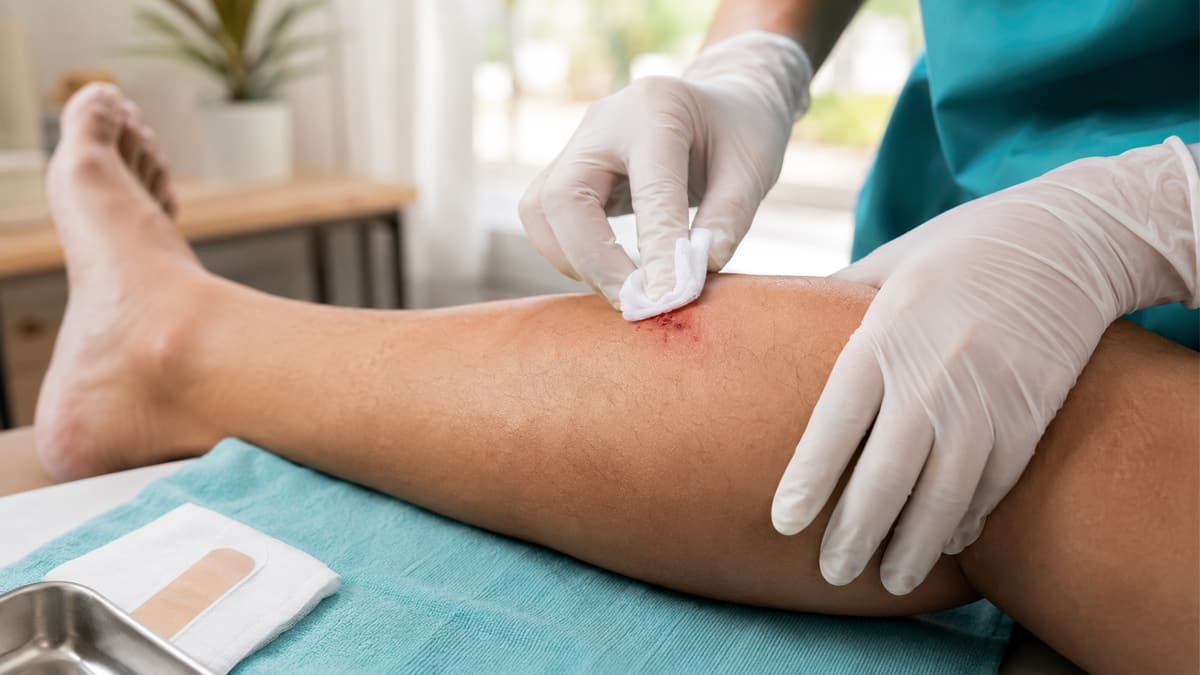
A reef cut is ragged and dirty. A fin cut is a different animal entirely — a modern fiberglass or plastic fin is sharp enough to open skin in one clean pass, usually your own board, usually in the half-second after a wipeout when the leash whips the board back at you. We see fin cuts across the calf, the top of the foot, the scalp, and occasionally the face, and the pattern is almost always the same: a straight, deep, surprisingly tidy line that looks less dramatic than it is. People underestimate them because there’s no coral grit to deal with, but a deep, gaping fin cut is exactly the kind of wound that needs proper closure, not a wave of the hand and a plaster from the guesthouse shop.
Why fin cuts behave differently from reef cuts
Reef cuts are shallow, wide, and contaminated with grit that has to be scrubbed out before anything else happens. Fin cuts are usually the opposite: narrow, clean-edged, and often deeper than they look, because a sharp fin slices straight down through skin and fat without much resistance. A cut that’s only two or three centimetres long on the surface can go surprisingly deep, especially on the shin, foot, or scalp where there’s little padding. The upside is that a fin cut is far less likely to get infected from embedded debris. The downside is that a clean, gaping cut heals with a much better scar — and far less pain — if it’s closed properly within the first few hours, something a coral cut usually doesn’t need.
The classic setup is a wipeout at a crowded takeoff spot: your own board cartwheels on the leash and a fin catches your leg or foot on the way past, or, in a packed lineup at Main Point or Baby Point in peak season, somebody else’s board does the same to you. Scalp and face cuts happen less often but tend to come from being pitched forward onto your own nose rocker or fin as the board flips.
Does it need stitches?
Not every fin cut does, but the ones that do need to be seen within a matter of hours, not days, for the closure to work properly. Come in — don’t wait and see — if any of these apply:
- The cut is longer than about 1.5 to 2 centimetres, or the edges gape open rather than sitting closed when you let go
- You can see fat, muscle, or anything yellowish-white inside the wound — that’s subcutaneous fat, and it means the cut is through the full thickness of the skin
- It’s on the face, scalp, hand, foot sole, or over a joint, where both the cosmetic result and the function of the area matter
- It won’t stop bleeding after ten to fifteen minutes of firm, direct pressure
- You’re not sure your tetanus cover is current — fins carry wax, sand, and sea organisms into the cut just like anything else
- It happened more than six to eight hours ago — after that window, closing it with stitches becomes riskier because of infection, and we may need to manage it differently
A cut that’s short, shallow, and closes neatly on its own when you pinch the edges together can often be managed with butterfly strips or medical-grade skin adhesive instead of a needle. We’ll tell you honestly which category yours is in rather than stitching everything that walks through the door.
First aid before you get to us
- Apply firm direct pressure with a clean cloth or towel immediately — most fin cuts look worse than their actual blood loss because they bleed briskly for a short time.
- Rinse with fresh water, not seawater, once the bleeding has slowed, to clear surface sand and wax.
- Don’t try to tape it shut yourself with ordinary plasters if it’s gaping — plasters don’t hold tension on a moving joint or a hairy scalp, and a wound that reopens after a bad closure often scars worse than one left open and brought to us.
- Keep it elevated above heart level where you can, especially leg and foot cuts, to slow the bleeding further.
- Stay out of the water. This is non-negotiable with an open fin cut — salt water and a half-healed laceration are a bad combination, and a wound that reopens underwater bleeds again and invites infection.
What we do at the clinic
We clean the wound, check it’s not caught on anything deeper (a nerve, tendon, or vessel — rare, but we check), and close it with sutures or adhesive strips depending on size, depth, and location. We give a tetanus booster if yours isn’t current, and we’ll talk through scar care once it’s closed, since fin cuts on visible areas like the shin or face are the ones people care about most once the adrenaline wears off. For anything deeper than we’re equipped to manage — a suspected tendon injury in the foot, for instance — we’ll arrange onward referral. We provide itemised English receipts for the consultation, any sutures, and medication, which travel insurers generally process without complication.
Stitches usually come out, or dissolve on their own, within seven to twelve days depending on location and what we use. Scalp and face sutures come out sooner; foot and shin ones often stay in a little longer because that skin takes more strain while you’re walking.
Prevention
Fin cuts are mostly about awareness, not gear, though a few things genuinely help. Keep an eye on your board as you surface after a wipeout rather than assuming it’s drifted away — most fin cuts happen in the first second or two after a fall, when the board is still swinging on the leash nearby. In a crowded lineup, give other surfers’ boards a wider berth than feels necessary, particularly at peak-season takeoff spots where several people are often paddling for the same wave. Soft-top or rubber fins reduce the risk for beginners and kids, and checking that your fin screws are properly tightened before you paddle out avoids a loose fin catching at an odd angle during a fall.
Related reading
- Reef Cuts: How to Treat Them and Why Infection Is the Real Danger
- Jammed Fingers, Dislocations, and Thumb Sprains From Surfing in Arugam Bay
- Head Injuries and Concussion After a Surfing Wipeout in Arugam Bay
This article is general health information and not a substitute for medical advice. If you have a fin cut that’s gaping, deep, or won’t stop bleeding, walk in any time, day or night, or call 1990 for a free ambulance if the bleeding is severe.
Related articles
Surfing Injuries
Ankle and Knee Sprains: Surf and Reef-Walk Injuries in Arugam Bay
A rolled ankle on the reef walk or a twisted knee popping up too fast are two of the most common surf injuries we see. Here's how to tell a sprain from a break.
8 min read
Surfing Injuries
Broken Nose and Facial Injuries After a Wipeout in Arugam Bay
A board, fin, or reef to the face is one of the most common surfing injuries we see. Here's how to tell a broken nose from bruising, and when facial swelling means come in now.
7 min read
Surfing Injuries
Bruised or Fractured Ribs After a Wipeout: What Surfers Need to Know in Arugam Bay
A heavy wipeout onto your board or the reef can bruise or crack a rib. Here's how to tell the difference, why breathing matters more than X-rays, and when to come in.
7 min read