
Surfing Injuries
Jammed Fingers, Dislocations, and Thumb Sprains From Surfing in Arugam Bay
Sep 27, 2026 · 7 min read
It happens in half a second. A finger catches the rail as you duck-dive, the leash yanks tight around a thumb as the board cartwheels away from you, or you brace a fall with a stiff hand and one finger bends the wrong way against the sand. Compared to a bad wipeout at Main Point, it barely feels like an accident at all — which is exactly why so many people paddle back out on an injury that needed a splint, not a shrug. We see jammed fingers and thumb sprains constantly here, and while most are minor, a few every season turn out to be dislocations or fractures that were treated as “just jammed” for two or three days too long.
Why fingers and thumbs get hurt so often
Your hands are doing more work in the water than people realise: gripping the rail, paddling, popping up, bracing a fall, and — for the thumb specifically — sitting right in the path of the leash cord every time it goes tight. A finger bent sideways or backward past its normal range takes the force in the small joints between the bones, called the interphalangeal joints. The thumb has its own weak point at the base, where the leash cuff or a hard fall can wrench the joint past where it’s built to move. None of this requires a big wave. Some of the worst thumb sprains we treat come from small, closing-out days when people are still paddling hard and falling awkwardly in shallow water near the shore break.
Jam, sprain, dislocation, or fracture?
These four overlap enough in the first few minutes that guessing is unreliable. What helps is watching how the finger behaves once the initial shock passes.
- A simple jam hurts sharply for a few minutes, then settles into a dull ache. The finger looks normal, bends with some stiffness, and the pain is spread across the joint rather than pinpointed.
- A sprain (a stretched or partly torn ligament) swells over the following hour, is tender on the sides of the joint rather than the top or bottom, and you can usually still straighten and bend the finger, just with pain.
- A dislocation looks wrong immediately — the joint sits at an odd angle, often shortened or twisted compared to the finger next to it, and you generally cannot bend it at all. This needs to be seen and put back in place properly, not pulled back into position on the beach by a well-meaning friend.
- A fracture often causes pain concentrated at one exact point on the bone rather than at the joint, swelling that comes on fast, and sometimes a finger that sits slightly rotated compared to its neighbours when you make a loose fist — a sign that’s easy to miss unless you look for it directly.
The thumb has one extra red flag worth knowing on its own: pain and looseness specifically on the inside edge of the base joint after a leash injury or a fall onto an outstretched thumb can mean a torn ligament there (the same injury skiers call “skier’s thumb”). It’s easy to dismiss as a sprain because you can often still move the thumb, but an ulnar collateral ligament tear that heals loose can leave you with a weak grip permanently if it isn’t repaired properly.
First aid on the beach
- Don’t yank it straight. Pulling on a dislocated finger to “pop it back” without knowing exactly what you’re doing can trap tendon or ligament in the joint and turn a simple reduction into one that needs surgery.
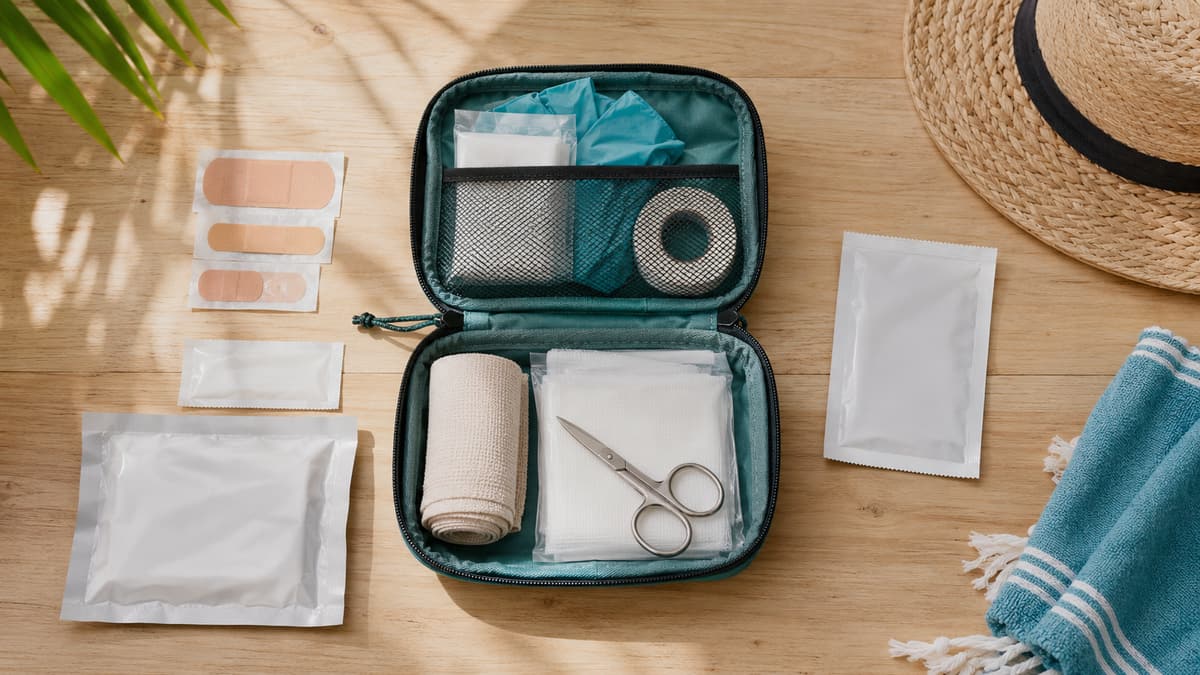
- Buddy-tape it for support, taping the injured finger to the one next to it, snug but not tight enough to cut circulation.
- Ice it through a cloth for fifteen minutes at a time to control swelling.
- Take it out of the water. Paddling and popping up both load the fingers and thumb repeatedly; surfing on a fresh injury is the most common reason a two-day recovery turns into a two-week one.
- Elevate the hand above heart level where practical.
When to come in
Walk in rather than waiting it out if any of these apply:
- The joint looks visibly deformed, shortened, or angled compared to the same finger on the other hand
- You cannot bend or straighten the finger at all
- The pain is sharply localised over one point of bone rather than spread across the joint
- There’s numbness or tingling beyond the injury itself
- A thumb injury involves pain and instability on the inside edge of the base joint, even if you can still move it
- Swelling and bruising haven’t clearly improved after two to three days of rest, ice, and taping
- The finger looks rotated relative to the others when you make a loose fist
What we do at the clinic
We check the joint’s alignment, stability, and the blood supply and sensation to the fingertip, since a dislocation that’s been left too long can affect both. A straightforward dislocation is reduced (put back into place) under local anaesthetic and re-checked with the joint’s stability tested afterward, since the same injury can dislocate again if the supporting ligament was badly torn. If a fracture is likely, we arrange an X-ray at the nearest facility with imaging, as Arugam Bay doesn’t have one on-site. Suspected thumb ligament tears get particular attention, since these sometimes need a splint for several weeks or a referral for surgical repair rather than just buddy-taping. We provide itemised English receipts for every consultation, X-ray referral, and splint, which most travel insurers process without back-and-forth.
Recovery
A mild jam or sprain is usually comfortable within one to two weeks with buddy-taping and rest from surfing. A reduced dislocation typically needs two to three weeks of protected movement before it can take real load again, and a confirmed thumb ligament tear can mean four to six weeks in a splint, longer if surgery is needed. Going back to paddling and popping up before the joint has properly settled is the main reason we see the same finger swell up again, often stiffer than before. If your trip is short, ask us directly what’s realistic — sometimes bodyboarding or a few gentle sessions without heavy gripping is a reasonable middle ground while a finger finishes healing, but a thumb ligament injury is not one to push through.
Prevention
Most of these injuries come down to how the hand meets a hard surface, not bad luck. Keep your fingers together and your palm flat rather than splayed when you brace a fall or push off the sand. Be conscious of the leash cuff around your ankle rather than your wrist if your board allows it, since a wrist or hand leash puts the cord directly in the path of your fingers and thumb during a wipeout. And at reef breaks with a shallow, hard bottom, a slightly looser grip on the rail during a duck dive gives your fingers somewhere to give if they do catch an edge.
Related reading
- Wrist Sprains and Fractures From Surfing Wipeouts in Arugam Bay
- Ankle and Knee Sprains: Surf and Reef-Walk Injuries in Arugam Bay
- Suspected Fractures in Arugam Bay: X-Rays, Splinting, and What Happens Next
This article is general health information and not a substitute for medical advice. If you’ve hurt a finger or thumb surfing and aren’t sure how bad it is, walk in any time, day or night, or call 1990 for a free ambulance if the injury is severe.
Related articles
Surfing Injuries
Ankle and Knee Sprains: Surf and Reef-Walk Injuries in Arugam Bay
A rolled ankle on the reef walk or a twisted knee popping up too fast are two of the most common surf injuries we see. Here's how to tell a sprain from a break.
8 min read
Surfing Injuries
Broken Nose and Facial Injuries After a Wipeout in Arugam Bay
A board, fin, or reef to the face is one of the most common surfing injuries we see. Here's how to tell a broken nose from bruising, and when facial swelling means come in now.
7 min read
Surfing Injuries
Bruised or Fractured Ribs After a Wipeout: What Surfers Need to Know in Arugam Bay
A heavy wipeout onto your board or the reef can bruise or crack a rib. Here's how to tell the difference, why breathing matters more than X-rays, and when to come in.
7 min read