
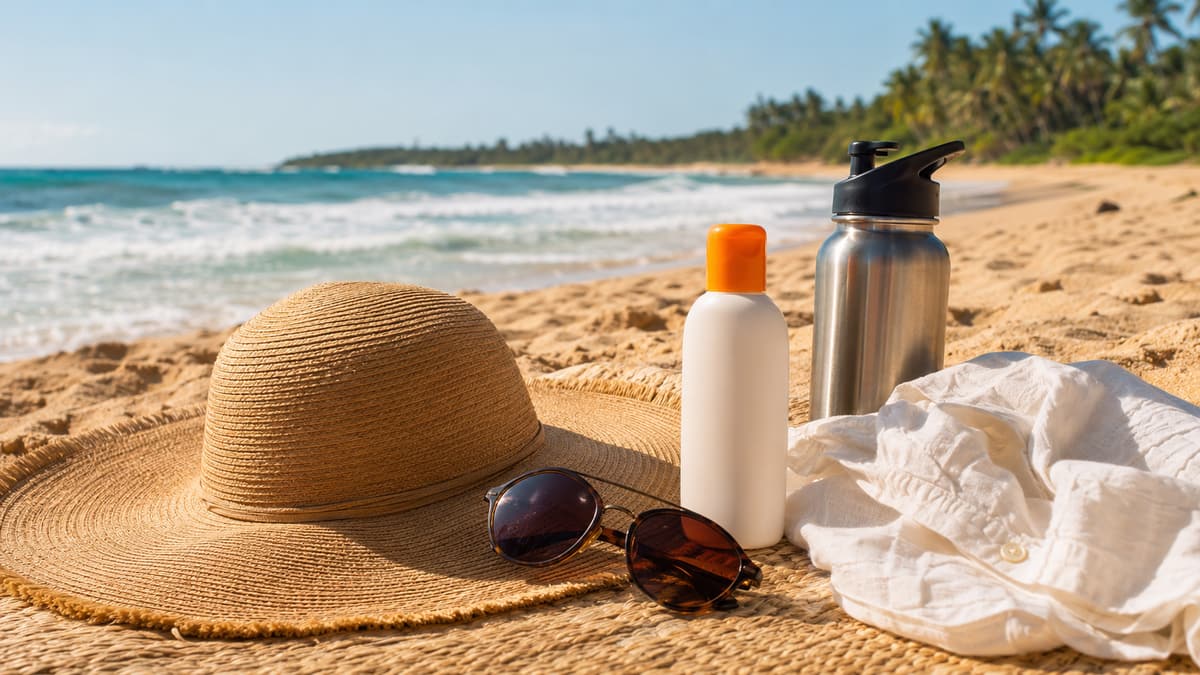
Surfing Injuries
Surfer's Eye (Pterygium): Why Years in the Sun, Wind, and Salt Water Take a Toll on Your Eyes
Sep 18, 2026 · 6 min read
If you’ve spent years chasing waves along the equator, you’ve probably noticed the surf community has a certain look — deep tan, sun-bleached hair, and often a small pinkish patch creeping across the white of one or both eyes. That patch has a name: pterygium, nicknamed “surfer’s eye.” It’s one of the most common long-term problems we see in people who’ve surfed tropical breaks for years, including a fair few Arugam Bay regulars, and most travelers have never heard of it until it’s already started.
What is pterygium?
Pterygium (pronounced tuh-RIJ-ee-um) is a growth of fleshy, often slightly pink or yellowish tissue that starts at the corner of the eye — usually the side closest to the nose — and slowly creeps across the white of the eye (the conjunctiva) toward the cornea, the clear dome you see through. It’s not cancer and it’s not an infection. It’s a benign overgrowth of tissue, but if it’s left to grow for years, it can eventually reach far enough onto the cornea to blur or distort your vision.
It develops gradually, usually over years rather than weeks, which is exactly why so many surfers don’t notice it happening. You don’t wake up with it overnight. It’s the cumulative result of thousands of hours in conditions your eyes were never really built for.
Why surfers get it
Three things drive pterygium, and surfing tropical breaks near the equator delivers all three at once:
- UV exposure. Arugam Bay sits close to the equator, and UV is intense here year-round. UV light reflecting off open water essentially doubles your exposure compared to being on land, since it hits your eyes from above and bounces back up off the surface.
- Wind and dryness. Constant wind dries out the surface of the eye and irritates it, which seems to accelerate the tissue changes that lead to pterygium.
- Sand and salt spray. The chronic low-grade irritation from salt water and blown sand adds to the effect.
Put those together over years of daily sessions, without sunglasses in the water, and the surface of the eye responds the way skin does with a lifetime of sun exposure — except most people protect their skin far more consistently than they protect their eyes.
Symptoms to watch for
Early on, pterygium often causes no symptoms beyond the visible patch itself. As it develops, people commonly notice:
- A raised, wedge-shaped patch of pink or yellowish tissue on the white of the eye, usually on the side nearest the nose
- Redness or a feeling that something is chronically irritating that eye
- Dryness, grittiness, or a mild burning sensation
- Blurred vision, if the growth extends far enough onto the cornea (this stage takes years and isn’t common in younger surfers)
- In some cases, mild astigmatism as the growth pulls on the shape of the cornea
It’s easy to mistake early pterygium for ordinary red, tired eyes after a long session — which is one reason it’s worth mentioning to a doctor rather than assuming it’s just salt and sun catching up with you.
What we can do about it
If you come in with a suspected pterygium, we’ll examine the eye and tell you where things stand. Treatment depends on the stage:
- Small, stable, and not affecting vision. Often no treatment is needed beyond protecting the eye from further UV and wind exposure to slow or stop progression. We may suggest lubricating eye drops if the area feels dry or irritated.
- Inflamed or irritated. A short course of mild steroid eye drops can calm inflammation and redness, but this needs to be supervised — steroid drops in the wrong situation can cause real problems, so don’t just buy them over the counter without a proper look at the eye first.
- Growing toward the cornea or affecting vision. This needs referral to an ophthalmologist for possible surgical removal. Surgery is generally straightforward and done as a day procedure, though the growth can occasionally return, which is why prevention matters even after treatment.
We won’t ever try to remove or treat a pterygium ourselves at the clinic beyond initial assessment and drops — this is a job for an eye specialist, and we can point you to a good one in Colombo or arrange the referral if you’re heading that way.
Prevention: the good news
Pterygium is one of the more preventable long-term surf injuries, and the fix is simple, cheap, and something most surfers already half-do:
- Wear proper UV-blocking sunglasses whenever you’re not actually in the water — walking to the break, hanging out at the point, riding your scooter. Wraparound styles that block wind as well as UV are best.
- Consider prescription or fitted eyewear designed for watersports if you’re going to be surfing regularly for months or years, not just a two-week trip.
- Use lubricating eye drops if your eyes feel dry or gritty after sessions — this reduces the chronic irritation that contributes to pterygium.
- A brimmed hat or surf visor cuts down on the UV bouncing up off the water.
None of this will ruin your surfing. It just means treating your eyes with the same seriousness you (hopefully) already treat your skin.
When to come in
See us if you notice a new pink or yellow patch developing on your eye, if an existing patch seems to be growing, if your vision seems affected, or if an eye is persistently red, gritty, or uncomfortable for more than a few days. Most of the time it’s nothing urgent, but it’s worth a proper look rather than guessing.
Related reading
- Red, Itchy Eyes in Arugam Bay: Conjunctivitis, Sand, and Salt Water
- Sun Protection and Heat Illness on Sri Lanka’s East Coast
- Surfer’s Ear: Why Your Ears Hurt After Months of Surfing
This article is general health information and not a substitute for medical advice. If you’re worried about a change in your eye, walk in and see us, or call 1990 for emergency transport.
Related articles
Surfing Injuries
Ankle and Knee Sprains: Surf and Reef-Walk Injuries in Arugam Bay
A rolled ankle on the reef walk or a twisted knee popping up too fast are two of the most common surf injuries we see. Here's how to tell a sprain from a break.
8 min read
Surfing Injuries
Broken Nose and Facial Injuries After a Wipeout in Arugam Bay
A board, fin, or reef to the face is one of the most common surfing injuries we see. Here's how to tell a broken nose from bruising, and when facial swelling means come in now.
7 min read
Surfing Injuries
Bruised or Fractured Ribs After a Wipeout: What Surfers Need to Know in Arugam Bay
A heavy wipeout onto your board or the reef can bruise or crack a rib. Here's how to tell the difference, why breathing matters more than X-rays, and when to come in.
7 min read