
Common Illnesses
Swimmer's Ear in Arugam Bay: The Infection That Isn't Surfer's Ear
Aug 10, 2026 · 6 min read
Almost every week someone walks into the clinic holding the side of their head, convinced they’ve developed “surfer’s ear” after just a few days in Arugam Bay. Nearly all of them actually have swimmer’s ear — a completely different, much more common problem that shows up fast and clears up fast if you treat it properly. Surfer’s ear takes years of cold water to develop. Swimmer’s ear can develop in a single afternoon.
Two conditions, one confusing name
Surfer’s ear (exostosis) is bone slowly growing inside the ear canal after years of repeated cold-water and wind exposure. It’s painless at first, progressive, and needs surgery once it’s advanced. We’ve written about it separately.
Swimmer’s ear (the medical name is otitis externa) is an infection of the skin lining the ear canal. It’s caused by water sitting in the ear long enough for bacteria or fungus to take hold, and it can happen to anyone after a single long swim, a few days of duck-diving, or a week of showers that never quite dried out. It is painful, often quite suddenly, and it is what almost every visiting surfer with a “bad ear” in Arugam Bay actually has.
The two get confused because surfer’s ear makes swimmer’s ear more likely over the years — the narrowed canal traps water more easily — but you don’t need years of surfing to get swimmer’s ear. A week in the water is plenty.
Why Arugam Bay is a good place to get it
Warm tropical water, humidity that never lets your ear canal fully dry between sessions, and repeated duck-dives that push water deep into the canal — it’s close to ideal conditions for otitis externa. Add sunscreen, sand, or wax residue in the ear, and the skin barrier that normally keeps bacteria out gets broken down even faster.
Symptoms
- Ear pain that ranges from mild to severe — classically worse when you tug the earlobe or push on the little flap of cartilage in front of the ear canal (the tragus)
- Itching, often the first sign, before the pain sets in
- A feeling of fullness or blockage
- Discharge — clear at first, sometimes turning yellow, cloudy, or smelly as the infection progresses
- Muffled hearing on that side
- Redness and swelling you can sometimes see at the entrance to the canal
- In more advanced cases, swelling can close the canal almost completely and the pain becomes constant
If both ears are affected, or the pain is severe with fever, swelling spreading onto the outer ear, or you feel generally unwell, come in sooner rather than later.
What to do if you think you have it
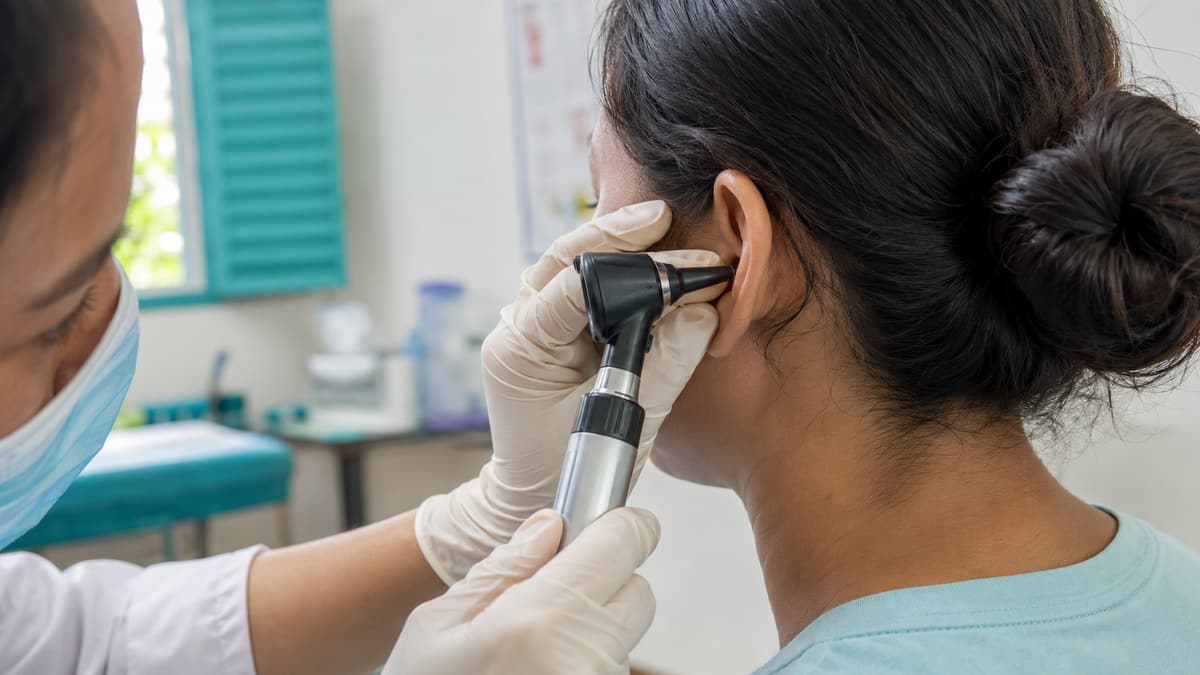
Come and see us. Otitis externa is usually a same-day fix: we look inside with an otoscope to confirm the diagnosis and check the eardrum is intact, clean out any debris or discharge blocking the canal (this step matters — ear drops don’t work well through a canal packed with wax and pus), and prescribe antibiotic or antibiotic-steroid ear drops.
While you’re waiting to be seen, or if you’re somewhere remote and can’t get in immediately:
- Keep the ear completely dry. No surfing, no swimming, no submerging your head in the shower, until it’s healed.
- Don’t put anything in your ear — no cotton buds, no fingers, no attempts to “clean it out” yourself. This is the single most common way a mild infection turns into a bad one.
- Take paracetamol or ibuprofen for pain at standard adult doses if you have no reason to avoid either.
- Don’t use leftover ear drops from home without checking with us first — the wrong drops for the wrong type of infection can make things worse, and a perforated eardrum changes what’s safe to use.
Most people feel dramatically better within 48 hours of starting the right drops and are fully clear within a week.
Preventing the next one
If you’re staying in Arugam Bay for more than a few days, a little prevention goes a long way:
- Dry your ears properly after every session. Tilt your head to each side and gently pull the earlobe to help trapped water drain, then dry the outer ear with a towel corner. You don’t need to reach inside the canal.
- Use drying drops after swimming or surfing if your ears trap water easily — a mix of alcohol and vinegar, or a proper over-the-counter drying solution, evaporates leftover moisture and keeps the canal too dry for bacteria to thrive. Ask at the pharmacy if you’d like some.
- Wear surf ear plugs if you’re prone to ear infections. Plenty of long-term surfers here wear them every session without noticing any difference in the water.
- Don’t dig around with cotton buds. A small amount of ear wax is protective, not dirty, and buds usually push debris deeper rather than removing it.
- Treat the first twinge early. An ear that feels itchy or slightly full for a day or two, treated promptly, rarely turns into the swollen, weeping, genuinely painful version.
When to come in urgently
- Severe pain, especially with swelling of the outer ear or the side of the face
- Fever or feeling unwell alongside ear pain
- Discharge that’s bloody, or a sudden change in hearing
- Pain that doesn’t start improving after two to three days of drops
- Any history of a perforated eardrum or previous ear surgery
Related reading
- Surfer’s Ear: Why Your Ears Hurt After Months of Surfing
- Ear Wax Removal in Arugam Bay: Blocked Ears After Surfing
- Reef Cuts: How to Treat Them and Why Infection Is the Real Danger
This article is general health information and not a substitute for medical advice. If your ear is painful, swollen, or discharging, walk in and see us any time — we’re open 24 hours on Panama Road — or call 1990 for free emergency transport if you’re unable to get here yourself.
Related articles

Common Illnesses
Common Cold and Flu in Sri Lanka: Managing Respiratory Illness While Traveling
A blocked nose and sore throat in Arugam Bay usually is just a cold. Here's how to tell it apart from something more serious, and how to treat it fast.
7 min read

Common Illnesses
Dehydration in the Tropics: Oral Rehydration Salts and When You Need an IV Drip
Heat, surfing, and stomach bugs dehydrate travelers fast in Sri Lanka. Learn how to rehydrate properly, and when oral salts are not enough and you need a drip.
7 min read
Common Illnesses
Ear Wax Removal in Arugam Bay: Blocked Ears After Surfing
Blocked, muffled ear after surfing or swimming in Arugam Bay? We safely remove ear wax and check for infection the same day. Here's what's going on and what not to do.
5 min read