
Traveler Health
Blocked Ears and Sinus Pain From Flying or Diving: Barotrauma Explained
Oct 21, 2026 · 7 min read
A fair number of travelers walk into the clinic the same day they land, or the day after a dive trip, holding one ear and asking if something’s “popped” inside their head. Most of the time it has — just not in a dangerous way. This is barotrauma: pressure damage to the ear or sinuses when the air pressure around you changes faster than your body can equalise it. It’s one of the most common, most preventable, and most over-worried-about travel complaints we see.
What’s actually happening
Your middle ear is a small, air-filled space behind the eardrum, connected to the back of your throat by a narrow tube called the Eustachian tube. Normally that tube opens briefly every time you swallow or yawn, letting air in or out so the pressure on both sides of the eardrum stays equal. If the tube is even slightly swollen — from a cold, allergies, or just congestion — it can’t open fast enough when the outside pressure changes quickly, which is exactly what happens during a plane’s descent or a dive’s descent.
Air pressure outside the eardrum rises faster than air pressure inside the middle ear can catch up. The eardrum gets sucked inward and stretched. In mild cases that just means fullness and muffled hearing. In more significant cases, small blood vessels in the eardrum or middle ear lining can rupture, or the eardrum itself can tear.
Why Arugam Bay specifically
Two things bring barotrauma through our door regularly. The first is simply the flight in — most visitors land at Colombo or Mattala after a long-haul leg, often with some congestion left over from recycled cabin air, and then the final descent catches them. The second is the dive and snorkel trips that run out to the reefs nearby, plus the freediving and duck-diving that comes with surfing itself. Breath-hold diving on even a mild cold is one of the single most common causes of ear pain we treat in surfers and divers here.
Symptoms
- A feeling of fullness or blockage in one or both ears
- Muffled hearing
- Dull ache that can become sharp pain
- Popping or crackling sensations when you swallow
- Dizziness or a brief spinning sensation
- In the sinuses: pressure or pain across the cheekbones or forehead, worse on descent
- In more severe cases: sudden sharp pain followed by relief (which can mean the eardrum has torn), fluid or blood-tinged discharge, or a ringing in the ear
What to do during the flight or the dive
On a plane:
- Swallow, yawn, or chew gum repeatedly during descent, before your ears start to hurt rather than after.
- Try the Valsalva manoeuvre: pinch your nose shut, close your mouth, and gently blow as if trying to pop your ears, in short controlled bursts. Stop if it hurts.
- Take a decongestant tablet or use a nasal spray about half an hour before descent if you’re congested. Ask at the pharmacy if you’re not sure which is appropriate for you.
- Stay awake for descent if you can. You can’t swallow and equalise effectively while asleep, which is why so many people wake up with sore ears.
On a dive or deep duck-dive:
- Equalise early and often — every metre on the way down, not just when you feel pressure.
- Never force it. If you can’t equalise, stop descending, come back up slightly, and try again.
- Don’t dive, snorkel with deep duck-dives, or freedive with a blocked nose or a cold. This is the single biggest preventable cause of a torn eardrum we see in visiting divers. It isn’t worth the dive.
- If you feel pain that doesn’t clear with gentle equalising, abort the dive. Pain that you push through gets worse, not better.
What to do if your ears or sinuses hurt afterward
Most barotrauma settles on its own within a few hours to a couple of days as the pressure equalises naturally. While you wait:
- Decongestant nasal spray or tablets can help the Eustachian tube open more easily.
- Paracetamol or ibuprofen for pain, at standard adult doses, if you have no reason to avoid either.
- Avoid flying again, diving again, or forceful nose-blowing until it settles.
- Don’t put anything inside the ear canal.
When to come and see us
- Pain that’s severe, or doesn’t start easing within a day or two
- Any discharge from the ear, especially if it’s bloody or clear fluid
- A sudden change in hearing, or hearing that doesn’t return to normal within a few days
- Significant dizziness or vertigo that doesn’t settle
- You suspect the eardrum has torn (often felt as a sudden sharp pain then relief)
- Sinus pain with fever, thick discoloured discharge, or pain that keeps building rather than easing
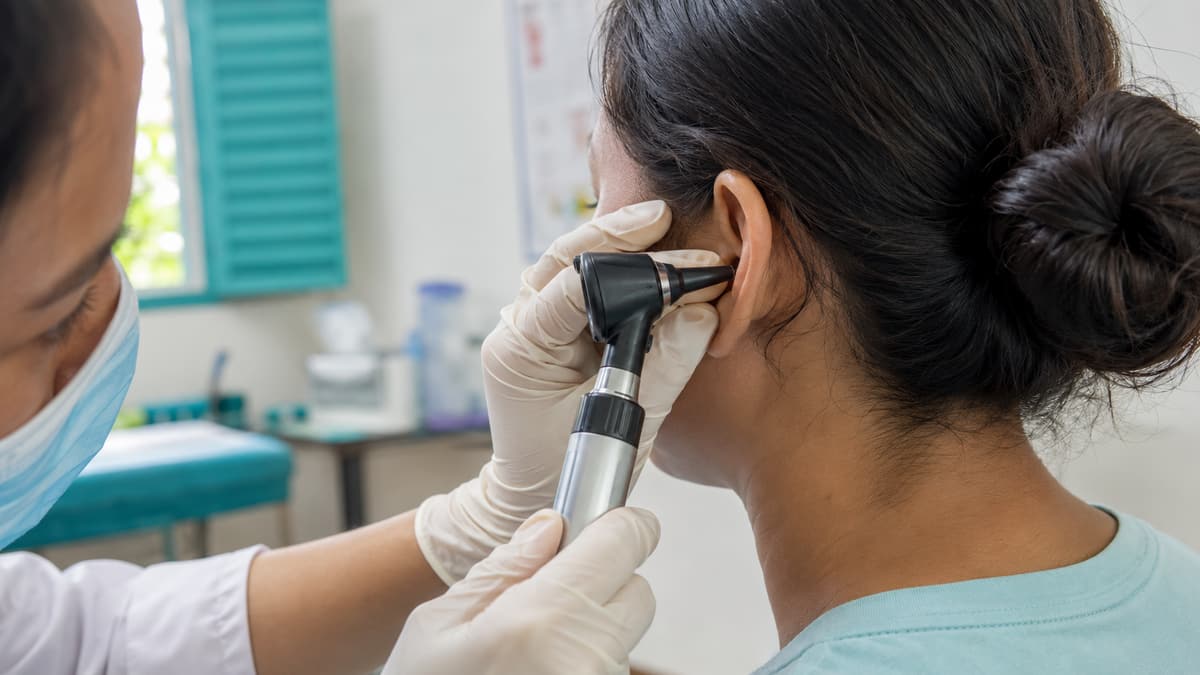
We’ll look inside with an otoscope to check whether the eardrum is intact, how much fluid or bruising is behind it, and whether there’s any sign of infection. A perforated eardrum usually heals on its own within a few weeks as long as you keep water out of it and avoid flying or diving until it’s closed — we’ll tell you exactly when it’s safe to do either again. If there’s an infection on top of the barotrauma, we’ll prescribe accordingly.
Before your next flight or dive trip
If you know your ears are sensitive, or you’re arriving with a cold, plan ahead rather than hoping it works out over the Indian Ocean. A short course of decongestant before travel, saline nasal rinses in the days beforehand, and simply postponing a dive by a day if you’re congested will save you a genuinely painful 48 hours and, occasionally, a ruptured eardrum that ends your trip’s diving altogether.
Related reading
- Diving and Snorkeling Safety in Arugam Bay
- Ear Wax Removal in Arugam Bay: Blocked Ears After Surfing
- Jet Lag in Sri Lanka: Resetting Your Clock Fast
This article is general health information and not a substitute for medical advice. If your ears or sinuses are badly painful, discharging, or your hearing hasn’t returned to normal, walk in and see us any time — we’re open 24 hours on Panama Road — or call 1990 for free emergency transport if you can’t get here yourself.
Related articles

Traveler Health
Allergic Reactions & Anaphylaxis in Sri Lanka: What to Do
New foods, new insects, new sun exposure — Sri Lanka has plenty of new allergy triggers. Here's how to spot a reaction early and what to do if it turns serious.
6 min read

Traveler Health
Altitude Sickness in Sri Lanka's Hill Country: Ella, Nuwara Eliya, and Adam's Peak Day Trips
Planning a day trip to Ella, Nuwara Eliya, or an overnight climb of Adam's Peak from Arugam Bay? Here's what altitude actually does at these heights.
7 min read

Traveler Health
Ant Bites in Arugam Bay: Fire Ants, Red Ants, and What Actually Helps
Small red ants and fire ants are everywhere in beach huts and on sandy paths here. Here's why the bites burn so much, how to treat them, and when a reaction needs a doctor.
6 min read